Tag: Monero

  • 12 Best Crypto to Buy Right Now — September 2026

    12 Best Crypto to Buy Right Now — September 2026

    cryptocurrencies digital style image

    Are you looking to invest in cryptocurrencies but unsure which one to buy? With so many options available, it can be overwhelming to decide how to invest your money. That’s why we’ve compiled a list of the best crypto to buy now, based on factors such as project developments, price performance, and market capitalization, as well as the overall potential for growth.

    In this article, we’ll take a closer look at the most promising cryptocurrencies, including staples such as Bitcoin and Ethereum, and a combination of several other promising crypto projects. We’ll discuss their features, advantages, and potential drawbacks, as well as provide insights into market trends. Whether you’re a seasoned investor or just starting out, this article will help you make an informed decision about the best crypto to buy now. 

    So, let’s dive in and explore the best cryptocurrencies to invest in September 2026:

    1. Bitcoin – The world’s oldest and largest crypto
    2. Ethereum – The leading DeFi and smart contract platform
    3. NEAR Protocol – AI and scalability focused blockchain
    4. Zcash – Privacy-focused cryptocurrency
    5. Uniswap – The pioneering automated market maker protocol
    6. Monero – A privacy-first cryptocurrency with fully obfuscated transactions
    7. XRP – The leading crypto remittance solution
    8. Solana – Smart contracts platform with high speeds and low fees
    9. Chainlink – The largest decentralized oracle network
    10. Cardano – Research-driven smart contract platform 
    11. Hyperliquid – Decentralized perpetuals exchange with an efficient order book
    12. BNB – The native coin of the Binance exchange

    The best cryptos to buy right now: Discover top investments for September 2026

    The following three cryptocurrency projects highlight our investment selection thanks to important developments and upcoming events that make them especially interesting to follow in the near future. These projects are updated each week based on the most recent developments and trends taking place in the crypto market.

    1. Bitcoin

    Bitcoin (BTC) is the original decentralized digital currency, enabling peer-to-peer transactions without the need for intermediaries such as banks or financial institutions. It was created in 2009 by an unknown person or group of people using the pseudonym Satoshi Nakamoto. Bitcoin was the first digital currency to eliminate the double spending problem without resorting to any central intermediaries.

    Bitcoin transactions are recorded on a public ledger called the blockchain, which is maintained by a network of computers around the world. This means that the transactions are secure and transparent, as anyone can view them, but they are also anonymous, as the identity of the participants in the transaction is not revealed.

    Bitcoin is often referred to as “digital gold” or a store of value, as it has a limited supply of 21 million coins, and its value is determined by market demand. Some people also see it as a hedge against inflation or a way to diversify their investment portfolio. It is by far the largest cryptocurrency by market cap in the industry, accounting for the value of more than 50% of all digital assets in circulation combined, making it arguably the most popular crypto to buy.

    Why Bitcoin?

    Bitcoin is trading at $83,054 after pulling back from above $87,100, but institutional demand remained strong throughout the week. US spot Bitcoin ETFs attracted $2.39 billion in net inflows, their largest weekly total since October 2025, despite daily inflows slowing toward the end of the week. The strong ETF demand helped push year-to-date flows back into positive territory at roughly $926 million, while broader market sentiment remained firmly in “Greed.”

    US spot Bitcoin ETF daily net flows over the past week. Source: SoSoValue

    Onchain indicators have also strengthened, with CryptoQuant arguing that Bitcoin’s latest recovery marks the beginning of a new bull-market phase. BTC reclaimed its 365-day moving average near $80,500, while its MVRV ratio moved above its own 365-day moving average—a development that also accompanied the end of the 2018 and 2022 bear markets. CryptoQuant CEO Ki Young Ju additionally noted that growing institutional ownership could make future Bitcoin cycles less extreme, potentially moderating both market peaks and drawdowns.

    Bitcoin MVRV ratio and its 365-day moving average. Source: CryptoQuant

    The next major area to watch is between $88,000 and $90,000, where onchain data points to a sizable supply cluster and increased potential for profit-taking. CryptoQuant places the upper profit-taking band for short-term holders near $90,300, suggesting selling pressure could increase as BTC approaches that level. However, the firm views such profit-taking as a potential pause within the broader uptrend rather than evidence of a renewed bearish trend.

    2. Ethereum

    Launched in 2015 by Vitalik Buterin and a team of developers, Ethereum is a decentralized, open-source blockchain platform that allows developers to build decentralized applications (dApps) and smart contracts. 

    Ethereum has a wide range of use cases beyond just a store of value or medium of exchange. Ethereum’s smart contract functionality allows developers to build dApps that can run without the need for intermediaries, like centralized servers or institutions.

    The Ethereum platform has gained widespread adoption and has become the backbone of the decentralized finance (DeFi) industry. DeFi applications built on Ethereum allow users to access financial services without relying on traditional banks or financial institutions. Ethereum’s smart contract functionality has also enabled the creation of non-fungible tokens (NFTs), which have gained popularity in the digital art and gaming worlds.

    While Ethereum has a strong community and has been highly influential in the cryptocurrency industry, it also faces challenges, such as scalability issues and high gas fees. These issues have spurred the development of various Layer 2 scaling solutions. In the long run, future updates are supposed to massively increase Ethereum’s throughput bringing the transaction per second (TPS) figure from 15 to 100,000.

    Why Ethereum?

    Ethereum is trading at $2,682 after struggling to sustain a move above the 2,775–2,825 resistance area. Despite the muted price action, institutional demand has remained supportive, with US spot Ethereum ETFs recording roughly $576 million in net inflows across four sessions from September 21 through September 24. Exchange balances have also fallen to around 14.88 million ETH, a multi-year low, while staking continues to absorb circulating supply.

    Ethereum also received another institutional use case after ARK Invest and Securitize announced that the ARK Venture Fund’s tokenized share class, ARKVX, will be issued on Ethereum. The fund provides eligible investors with indirect exposure to private technology companies including SpaceX, OpenAI and Anthropic, with Ethereum serving as the blockchain infrastructure for recording and transferring tokenized fund interests. The structure does not tokenize those companies directly, and the fund retains its existing interval-fund liquidity restrictions.

    From a technical perspective, $2,800 remains the key near-term level, with a sustained breakout potentially bringing the 3,000–3,050 area into focus. Veteran trader Peter Brandt has outlined a much longer-term scenario in which ETH could eventually reach approximately $8,600, but only after first breaking above $5,000. With ETH still well below that threshold, the immediate focus remains on clearing nearby resistance while ETF demand and growing adoption of Ethereum for tokenized financial assets provide broader fundamental support.

    3. NEAR Protocol

    NEAR Protocol is a high-throughput Layer 1 blockchain that uses sharding to scale transaction processing while maintaining fast finality and low fees. In recent years, the project has expanded its focus beyond traditional smart contract applications toward cross-chain infrastructure and AI agents, with the goal of making it easier for both users and autonomous software to interact with assets and applications across multiple blockchains.

    Developers can build smart contracts on NEAR using widely adopted programming languages, including Rust and JavaScript. The protocol also includes incentives for application developers, who can receive a portion of the transaction fees generated when users interact with their smart contracts. NEAR’s architecture is designed to scale dynamically as network activity increases, allowing additional capacity to be added through its sharding system.

    One of the ecosystem’s most notable products is NEAR Intents, a multichain transaction framework that allows users to specify the outcome they want rather than manually determining how a transaction should be executed. Independent solvers compete to fulfill these requests efficiently, abstracting away much of the complexity associated with bridges, gas tokens and individual networks. In practice, NEAR Intents is primarily used for cross-chain cryptocurrency swaps, providing a unified execution layer for moving assets between otherwise separate blockchain ecosystems.

    Why NEAR Protocol?

    NEAR is trading at $5.15 following a sharp weekly rally, with the token gaining roughly 26% as Bitwise’s proposed NEAR ETF moved closer to launch. The fund’s SEC registration statement became effective on September 24, while its shares were registered for exchange trading and approved for listing on NYSE Arca under the proposed ticker NRR. The ETF is designed to hold NEAR directly and can also stake a portion of its holdings, potentially creating a new channel for institutional demand if the product attracts capital.

    Beyond the ETF catalyst, NEAR’s fundamentals are increasingly centered on its Intents infrastructure, which allows users to execute cross-chain transactions without manually navigating bridges, gas tokens and individual liquidity routes. NEAR Intents reports more than $30 billion in cumulative volume across 35 chains, while the protocol’s revenue dashboard shows over $51 million in tracked fees and roughly 1.3 million NEAR transferred to its buyback multisig. This creates a more direct link between network activity and the NEAR token, particularly if Intents usage and protocol revenue continue to expand.

    NEAR Intents has processed more than $30 billion in cumulative cross-chain volume. Source: NEAR

    The key metrics to watch are now ETF adoption, Intents revenue, token buybacks and net issuance. Bitwise’s fund could add spot demand while staking some of its holdings, while continued Intents growth could increase the amount of revenue available for NEAR purchases. NEAR is also positioning its cross-chain infrastructure for autonomous AI agents, although that remains a less established part of the thesis. Together, these developments are shifting attention from NEAR’s traditional role as a layer-1 blockchain toward its potential as infrastructure for moving assets and executing transactions across multiple networks.

    4. Zcash

    ZCash (ZEC) is a privacy-focused cryptocurrency that was launched in 2016 by Zooko Wilcox-O’Hearn. It is a fork of Bitcoin, designed to enhance privacy and anonymity for its users. Unlike Bitcoin, where transaction details (such as sender, recipient, and amount) are publicly visible, ZCash allows users to choose between two types of transactions: transparent and shielded.

    Transparent transactions work similarly to Bitcoin, where all transaction details are recorded on the blockchain and visible to everyone. However, shielded transactions use a cryptographic technology called zk-SNARKs to allow fully private transactions. In shielded transactions, the details are encrypted, meaning that only the parties involved have access to the information, while the validity of the transaction is still verifiable by the network.

    ZCash is particularly valued by those who prioritize financial privacy and security, as it offers optional anonymity in a way that few other cryptocurrencies do.

    Why Zcash?

    Zcash is trading at $1,138 after an explosive rally that briefly carried ZEC above $1,200, its highest level since 2016. The privacy-focused cryptocurrency has gained roughly 45% over the past week and 138% over the past month, pushing its market capitalization above $20 billion. The rally has been supported by renewed interest in financial privacy, tightening available supply and substantial short liquidations that have accelerated the move higher.

    Institutional demand has emerged as another important catalyst following Grayscale’s conversion of its Zcash Trust into the ZCSH ETF, which began trading on NYSE Arca on August 25. The fund has grown to more than $460 million in assets under management, providing investors with brokerage-based exposure to ZEC. Meanwhile, shielded holdings have risen toward 4.85 million ZEC, potentially reducing immediately available supply as demand increases. The privacy narrative has also gained momentum amid concerns that advances in AI-powered blockchain analysis could make activity on transparent networks easier to trace.

    Zcash’s shielded holdings have climbed toward 4.85 million ZEC as demand for private transactions increases. Source: Blockworks

    Looking ahead, traders will be watching whether ETF demand and the broader privacy narrative can sustain ZEC’s rapid advance. The rally has been amplified by leveraged positioning, with tens of millions of dollars in short positions liquidated as ZEC broke through $1,000 and subsequently approached $1,200. While additional demand against tighter available supply could extend the rally, the same leverage that accelerated the move higher creates downside risk if momentum weakens or ETF demand slows.

    5. Uniswap

    Uniswap is the leading decentralized exchange (DEX) built on Ethereum, allowing users to swap cryptocurrencies directly from their wallets without relying on centralized intermediaries. The protocol pioneered the automated market maker (AMM) model, which replaces traditional order books with liquidity pools supplied by users who earn fees for providing liquidity.

    The protocol is governed by the UNI token, which gives holders the ability to propose and vote on changes affecting Uniswap’s development and ecosystem. Since its launch in 2020, Uniswap has become one of the largest decentralized finance (DeFi) applications by trading volume and continues to expand through innovations such as Uniswap v4, introducing customizable liquidity pools and new infrastructure for tokenized real-world assets and institutional adoption.

    Why Uniswap?

    Uniswap is trading at $6.98 after rallying sharply alongside a broader rotation into altcoins and DeFi assets. UNI gained nearly 40% over the past week as trading activity on the recently launched Robinhood Chain surged, with Uniswap handling the vast majority of the network’s decentralized exchange volume. Daily DEX volume reached roughly $3 billion during one particularly active session, helping UNI break above a multi-year descending trendline as traders responded to the protocol’s improving value-accrual mechanics.

    Uniswap trading activity on Robinhood Chain. Source: WuBlockchain

    The key catalyst has been Uniswap’s fee switch, which uses a portion of protocol fees to buy and permanently burn UNI. Heavy Robinhood Chain activity recently resulted in approximately 184,000 UNI worth $1.15 million being burned in a single day, the first daily burn above $1 million. Cumulative DEX volume on Robinhood Chain has now surpassed $40 billion, while Uniswap reportedly generated nearly $79 million in trading fees from the network over a recent 30-day period. Tokenized stocks are contributing to this growth by increasingly using Uniswap’s higher-fee pools, strengthening the connection between UNI’s tokenomics and activity in tokenized assets.

    Looking ahead, traders are watching whether UNI can maintain its breakout, with $6.35 identified as an important support area and the recent $7.48 high providing a near-term level to reclaim. Continued growth in Robinhood Chain activity could accelerate UNI burns and provide further support, although Uniswap’s increasing dependence on a single network introduces additional risk. Changes to Robinhood’s swap routing or fee structure, or regulatory challenges affecting the network, could reduce Uniswap’s fee generation and weaken the burn mechanism that has become a major catalyst for UNI’s recent rally.

    6. Monero

    Monero is a privacy-focused cryptocurrency designed to offer anonymous and untraceable transactions. Launched in 2014 as a fork of Bytecoin, Monero was introduced through a whitepaper written by the pseudonymous “Nicolas van Saberhagen.” Unlike Bitcoin or Ethereum, Monero conceals sender and receiver identities, as well as transaction amounts, through advanced cryptographic techniques such as stealth addresses and ring signatures. This strong focus on privacy has made Monero a favorite among users seeking true financial confidentiality.

    Monero runs on a Proof-of-Work (PoW) consensus mechanism and is deliberately resistant to ASIC mining to support decentralization. It can be mined efficiently using consumer-grade hardware, and its privacy-preserving features also improve fungibility—individual XMR coins are indistinguishable from one another and can’t be blacklisted. Despite its strong standing within the crypto community, Monero has been the subject of regulatory scrutiny due to concerns over its potential use in illicit activities. Nonetheless, it remains the most widely adopted privacy coin in the market today.

    Why Monero?

    Monero is trading at $537.03 after extending a seven-week rally that has made August its strongest month since April 2021. XMR has gained more than 46% since the start of the month and pushed decisively above $500 as demand for privacy-focused cryptocurrencies intensified. The advance has been particularly notable given Monero’s limited availability on major centralized exchanges, while similar strength across other privacy coins suggests the move is part of a broader rotation toward the sector.

    Derivatives activity has accelerated alongside the rally, potentially adding to recent volatility. Monero open interest nearly doubled from around $131 million at the beginning of August to almost $260 million, approaching the historical high of $277 million recorded in January. Short liquidations have also significantly exceeded long liquidations, suggesting forced buying may have contributed to the upside. Meanwhile, THORChain has reportedly introduced native Monero support, enabling swaps between XMR and assets such as Bitcoin and Ethereum and potentially improving access to the cryptocurrency outside centralized exchanges.

    Monero open interest is approaching its previous record as derivatives activity accelerates. Source: CoinGlass

    Momentum remains firmly in favor of buyers, but the rapid advance has pushed XMR into overbought territory while derivatives positioning is close to record levels. That combination could produce elevated volatility if traders begin taking profits or leveraged positions unwind. On the other hand, sustained interest in privacy assets and improved accessibility through THORChain could provide fundamental support, leaving traders focused on whether Monero can consolidate its breakout above $500 after one of its strongest monthly performances in years.

    7. XRP

    XRP is a digital cryptocurrency that was created by Ripple Labs in 2012. It is used as a means of payment and transfer of value on the Ripple payment protocol, which is designed to enable fast and secure transactions between financial institutions as well as individuals.

    XRP is unique in that it is not based on the blockchain technology used by many other cryptocurrencies. Instead, it uses a distributed consensus ledger called the XRP Ledger, which is maintained by a network of validators. This allows for faster transaction processing times and lower fees compared to traditional payment methods.

    XRP has been popular among cryptocurrency traders and investors due to its high liquidity and clear potential for broader adoption, especially as a remittance solution. However, it has also been the subject of controversy and legal action, with US regulators alleging that it is a security and should thus be subjected to securities regulations. This has somewhat hindered the potential of XRP as an investment, and handcuffed Ripple’s growth as a company.

    Why XRP?

    XRP is trading at $1.48 following a strong recovery that has brought renewed attention to the token, particularly among South Korean retail traders. XRP accounted for roughly 32% of 24-hour trading volume on Upbit as activity on the country’s largest crypto exchange surged, while the token gained around 35% over seven days. The rally has coincided with improving regulatory sentiment following Ripple CEO Brad Garlinghouse’s participation in White House discussions on US crypto legislation, alongside renewed whale accumulation.

    XRP accounted for nearly a third of Upbit’s 24-hour trading volume as South Korean crypto activity rebounded. Source: Upbit DataLab

    Derivatives markets have also become considerably more active, with XRP open interest reportedly climbing from around $2.3 billion to $3.56 billion. The increase followed XRP’s breakout from a two-week trading range and reports that large holders accumulated approximately 190 million XRP in a single day. Institutional interest has strengthened as well, with recent XRP ETF inflows adding another source of demand alongside the resurgence in retail trading.

    The main question is whether XRP can sustain its recovery through continued spot demand rather than relying heavily on leveraged positions. Rising open interest can amplify price moves in either direction, leaving the market more exposed to liquidations if momentum reverses. For now, whale accumulation, returning Korean liquidity and improving institutional demand provide support for the rally, but traders will be watching whether these trends persist after the recent sharp advance.

    8. Solana

    Solana is a smart contract platform known for its distinctive architecture, enabling it to handle thousands of transactions per second while maintaining very low costs. It accomplishes this by using a combination of a unique Proof-of-History algorithm and a Proof-of-Stake consensus mechanism. SOL, the native cryptocurrency of the platform, is one of the cheapest to transfer, with users typically paying less than $0.001 per transaction.

    Founded in 2018 by Anatoly Yakovenko, Solana’s mainnet went live in March 2020 and experienced a surge in adoption throughout 2021. Despite a significant drop in value during the 2022 bear market, Solana remains one of the most robust ecosystems in the cryptocurrency space and continues to be seen as a potential candidate for significant future growth.

    Why Solana?

    Solana is trading at $75.59 as buyers attempt to defend the $73-$75 region following its recent breakout. The area previously acted as resistance and has now become an important test of whether SOL can maintain its short-term recovery structure. While the token has struggled to move decisively beyond the upper-$70s, holding current support would keep the focus on a potential rebound toward $80-$85.

    Technical setups remain mixed, with analysts outlining both direct-breakout and deeper-pullback scenarios. A move through resistance around $77-$78 and then $82.25 would strengthen the bullish case, potentially bringing $87 into focus before higher resistance around $98.40. Other traders see the possibility of SOL first revisiting the $67 area, where a brief breakdown followed by a quick recovery could provide another potential base for an upside move.

    The broader outlook depends heavily on whether Solana can maintain its recent support levels. Losing $73 would weaken the immediate breakout structure, while a deeper decline below $66-$67 could shift attention toward the previous Fibonacci support near $63.89. Conversely, a sustained breakout above the low-$80s would provide stronger confirmation that buyers are regaining control, with $85-$87 representing the next meaningful upside zone before traders begin considering more ambitious longer-term targets.

    9. Chainlink

    Chainlink is a decentralized oracle network that enables blockchains and smart contracts to securely access trustworthy data from external sources. It is designed to solve the so-called “oracle problem,” which describes the challenge blockchains face when trying to obtain information that exists outside their own environments. By linking on-chain applications with off-chain data, Chainlink makes it possible to support use cases that could not rely on blockchain-native information alone.

    Chainlink has established itself as the dominant oracle solution in decentralized finance and is also seeing growing adoption in areas such as real-world asset tokenization. DeFi protocols can use Chainlink to provide smart contracts with cryptocurrency price data from centralized exchanges, while RWA platforms can obtain accurate market valuations with a lower risk of manipulation. This can help tokenized real estate, commodities, and other assets maintain dependable and current valuations on-chain.

    Why Chainlink?

    Crypto investors may want to keep a close eye on Chainlink as it continues to establish itself as essential infrastructure for tokenized finance. BitGo’s move to select Chainlink CCIP as the sole cross-chain infrastructure for WBTC and future assets issued by BitGo is a notable vote of confidence in Chainlink’s security and interoperability technology.

    Chainlink is already operating on a substantial scale. Its infrastructure has facilitated more than $32 trillion in transaction value, protects over $110 billion across DeFi and cross-chain applications, and underpins approximately 70% of oracle-dependent DeFi value worldwide. CCIP is expanding rapidly as well, with quarterly volume climbing to $4.9 billion in Q2 2026.

    The bigger potential opportunity comes from the expansion of real-world asset tokenization. Standard Chartered forecasts that tokenized onchain assets could reach $4 trillion by the end of 2028 and believes Chainlink is particularly well placed to deliver the data, interoperability, and compliance infrastructure needed to support these assets.

    This outlook prompted Standard Chartered to assign LINK a $200 price target for the end of 2030, partly based on projections that Chainlink’s fee generation could increase by roughly 25 times. A $200 LINK price would imply upside of more than 2,300% from its current level.

    Chainlink’s expanding network of institutional relationships, including Swift, DTCC, JPMorgan, Mastercard, UBS, Fidelity and BitGo, further strengthens the investment thesis. The case is straightforward: if a larger share of the global financial system shifts onchain, Chainlink could emerge as one of the major infrastructure providers enabling that transition.

    10. Cardano

    Cardano is a decentralized, open-source blockchain platform designed for smart contracts and decentralized applications (dApps), with a strong emphasis on scalability, security, and sustainability. Launched in 2017 by Ethereum co-founder Charles Hoskinson, Cardano uses its native cryptocurrency, ADA, for transactions, staking, and network governance. Unlike many blockchain projects, Cardano follows a research-driven development process, with its core technologies undergoing academic peer review before implementation.

    Cardano is powered by Ouroboros, one of the first peer-reviewed Proof-of-Stake (PoS) consensus mechanisms, allowing the network to achieve security while consuming only a fraction of the energy required by Proof-of-Work blockchains such as Bitcoin. The blockchain is divided into two layers: the Cardano Settlement Layer (CSL), which handles ADA transactions, and the Cardano Computation Layer (CCL), which executes smart contracts and decentralized applications through the Plutus platform.

    The Cardano ecosystem supports hundreds of decentralized applications spanning decentralized finance (DeFi), NFTs, gaming, wallets, and other blockchain services. The maximum supply of ADA is capped at 45 billion coins, with staking rewards distributed to network validators who help secure the blockchain. As one of the largest cryptocurrencies by market capitalization, Cardano continues to evolve through a multi-stage roadmap focused on decentralization, scalability, governance, and interoperability, positioning itself as one of the leading smart contract platforms in the crypto industry.

    Why Cardano?

    Cardano is trading at $0.1876 after gaining nearly 10% as investors shifted their focus to the blockchain’s next major development phase. Following the successful Van Rossem upgrade in July, attention has turned to the upcoming Dijkstra era, which aims to significantly improve scalability through features such as Nested Transactions, Linear Leios and Peras. While these upgrades are not expected to reach mainnet until late 2026, the roadmap has strengthened confidence in Cardano’s long-term technical direction.

    The rally has also been supported by renewed accumulation from large investors. According to Santiment, whale wallets acquired more than 240 million ADA over the past five days, helping fuel a 22% price increase. The combination of growing whale activity and optimism surrounding Cardano’s development roadmap suggests investors are beginning to position ahead of future network upgrades, although analysts note that long-term price performance will ultimately depend on successful execution and broader ecosystem growth.

    Despite the recent gains, Cardano remains well below its previous all-time high, leaving plenty of room for recovery if network upgrades translate into higher developer activity, stronger on-chain adoption and increased demand for the ecosystem.

    11. Hyperliquid

    Hyperliquid is a decentralized perpetual futures exchange built to rival centralized trading platforms in speed, liquidity, and user experience—all while remaining fully on-chain. Unlike traditional DEXs that often struggle with performance bottlenecks, Hyperliquid uses a custom high-performance layer-1 blockchain specifically optimized for trading. This allows it to offer ultra-low latency, high throughput, and a seamless trading experience without relying on external validators or rollups.

    One of Hyperliquid’s key innovations is its order book-based model, which is uncommon among decentralized platforms. While many DEXs use automated market makers (AMMs), Hyperliquid implements a central limit order book (CLOB), giving traders more control over order execution and tighter spreads. This design makes it particularly appealing to professional and high-frequency traders who expect the responsiveness of centralized exchanges but want the trustlessness of DeFi. Its deep liquidity pools and tight integration with crypto-native assets further enhance its trading dynamics.

    Why Hyperliquid?

    Hyperliquid’s HYPE token is trading at $63.27 after a strong multi-week advance, with momentum accelerating alongside rising ETF activity. US-listed HYPE ETFs from 21Shares (THYP) and Bitwise (BHYP) have now recorded nearly $41 million in total trading volume since launch, with daily turnover jumping roughly 50% this week. For newly launched ETFs, that kind of post-debut volume expansion is atypical, as most products see front-loaded interest before fading. Instead, HYPE-linked funds are building participation during a broader risk-off environment in equities, bonds, gold and even Bitcoin.

    The timing has amplified the narrative. While major asset classes have stalled or pulled back, HYPE has outperformed, rising sharply year to date and attracting capital rotation. The two ETFs posted their strongest combined net inflow day this week at $25.5 million, suggesting institutional exposure is increasing beyond launch-week speculation. At the same time, reports indicate wallets linked to Grayscale accumulated and staked roughly $25 million worth of HYPE, reinforcing the view that asset managers are positioning ahead of potential additional ETF approvals.

    HYPE/USDT three-day price chart. Source: TradingView

    Structurally, Hyperliquid’s appeal extends beyond token price momentum. The protocol has captured a dominant share of onchain perpetual futures activity, positioning itself as a high-throughput derivatives venue rather than a single-asset trade. If ETF inflows persist and onchain volumes remain elevated, HYPE’s valuation case will increasingly hinge on sustained fee generation and ecosystem expansion. However, given the speed of the recent rally, near-term volatility should be expected as leveraged positioning adjusts to higher price levels.

    12. BNB

    BNB (formerly Binance Coin) is a cryptocurrency created by the popular cryptocurrency exchange Binance. Binance is the largest cryptocurrency exchange in the world, allowing users to buy, sell, and trade a wide range of digital assets.

    BNB was initially one of the ERC-20 tokens on the Ethereum blockchain but has since migrated to its own blockchain, known as BNB Chain. BNB is used as a utility token within the Binance ecosystem and has a variety of use cases. For example, users can use BNB to pay for transaction fees on the Binance exchange, receive discounts on trading fees, participate in token sales on Binance Launchpad, and purchase goods and services from merchants that accept BNB as payment.

    One of the unique features of BNB is that it has a deflationary model. Binance uses a part of its profits each quarter to buy back and burn BNB tokens, reducing the total supply of the token over time. This mechanism is designed to create scarcity and increase the value of BNB over time, with the end goal of reducing the circulating supply of BNB from the initial 200 million to 100 million BNB.

    Why BNB?

    BNB reclaimed $900 this week after bouncing sharply from the $800–$820 demand zone, with multiple bullish technical structures now aligning behind a potential push back toward $1,000 in December. A double-bottom pattern on the 4H chart, combined with a clean breakout from a multi-week falling wedge, signals fading seller momentum and renewed appetite from dip-buyers. Liquidation heatmaps reveal over $112 million in short liquidations clustered near $1,020, suggesting a move toward that level could accelerate quickly if BNB breaks and holds above $900–$920.
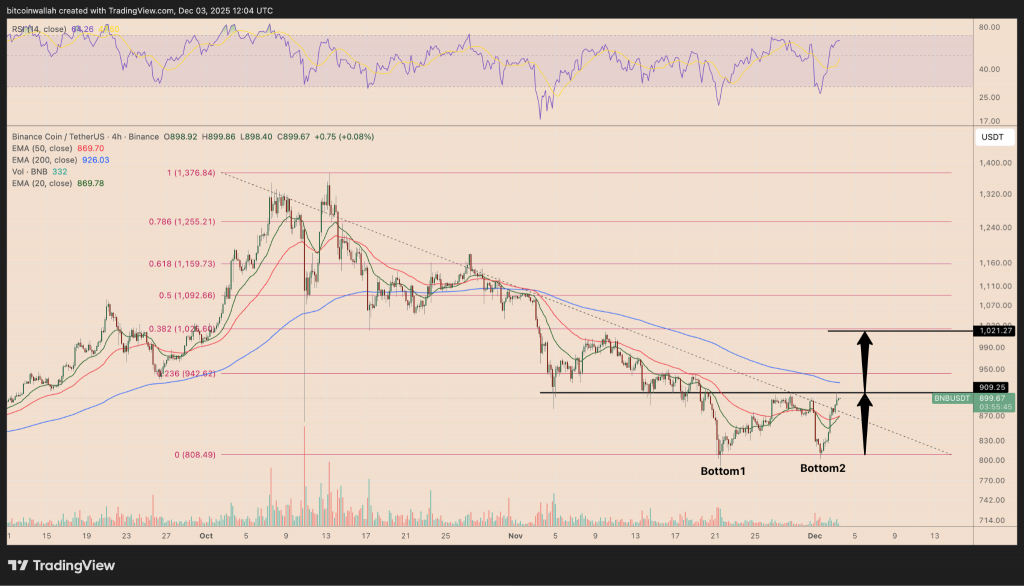
    BNB’s double-bottom and wedge breakout point toward a $1,000+ target
    BNB’s double-bottom and wedge breakout point toward a $1,000+ target. Source: Bitcoinwallah / TradingView

    However, BNB’s narrative this week also revolved around turbulence in the corporate treasury sector. CZ’s YZi Labs launched a formal attempt to overhaul the board of CEA Industries — the largest public BNB-holding company — accusing management of destroying shareholder value after the stock plunged 89% from its July peak. YZi aims to reverse recent bylaw changes, expand the board, and install its own nominees, arguing that CEA has failed to execute on its strategy of becoming the leading BNB treasury company. CEA responded by reaffirming its commitment to the BNB strategy while opening a dialogue with YZi to resolve concerns.
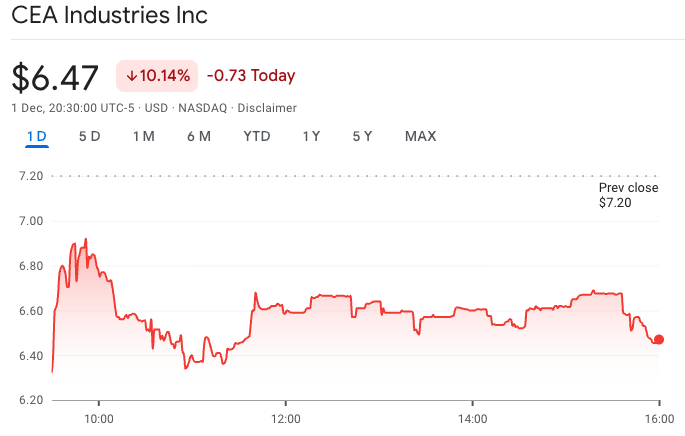
    CEA stock collapses as YZi Labs pushes for a board takeover
    CEA stock collapses as YZi Labs pushes for a board takeover. Source: Google Finance

    CEA stock collapses as YZi Labs pushes for a board takeover. Source: Google FinanceDespite governance drama and broader market pressure, BNB has held up better than many large-cap assets this quarter, outperforming even as it trades well below its mid-October all-time high of $1,367. CEA’s reported holdings of 515,054 BNB at an average entry of $851 place its treasury slightly underwater, yet BNB itself remains up 17.8% year-to-date, reinforcing its relative strength during the latest downturn. If bullish technicals continue to hold — and especially if liquidation clusters begin to trigger — analysts say BNB could feasibly revisit the $1,020–$1,115 range before year-end.

    Best cryptocurrencies to buy at a glance

     Native AssetLaunched InDescriptionMarket Cap*
    BitcoinBTC2009A P2P open-source digital currency$1.68 tln
    EthereumETH2012The leading DeFi and smart contract platform$333 bln
    NEAR ProtocolNEAR20202020$6.73 bln
    ZcashZEC2016Privacy-focused cryptocurrency$26.4 bln
    UniswapUNI2020The pioneering automated market maker protocol$5.56 bln
    MoneroXMR2014A privacy-first cryptocurrency with fully obfuscated transactions$10.84 bln
    XRPXRP2015The leading crypto remittance solution$93.4 bln
    SolanaSOL2020Smart contracts platform with high speeds and low fees$68.5 bln
    ChainlinkLINK2017The largest decentralized oracle network $9.78 bln
    CardanoADA2017Research-driven smart contract platform$8.91 bln
    HyperliquidHYPE2024Decentralized perpetuals exchange with an efficient order book$24.1 bln
    BNBBNB2017The native coin of the Binance exchange$105.3 bln

    Best crypto to buy for beginners

    If you are just starting out in crypto, it is advisable to stick to cryptocurrency projects that are less prone to volatility and are generally more established. While this approach does have a downside, as it becomes much more difficult to expect triple-digit or larger gains, the major upside is that you are not exposed to projects that have a chance of failing and, thus, losing your entire investment. 

    In order to identify projects that are stable and thus feature low volatility, you can start by following the parameters listed below:

    • The crypto asset has a market capitalization that places it into the cryptocurrency top 100 (roughly $200 million as of autumn 2026)
    • The crypto asset is available for trading on the best crypto exchange platforms and can be exchanged for fiat currencies
    • The crypto asset boasts healthy liquidity ($100M/day and more), which allows you to execute buy and sell orders quickly and without slippage 
    • The crypto asset is part of a reputable crypto project with clear goals, a realistic roadmap, and products and services that look to address real-world problems

    Some of the best cryptos to buy for beginners are those that follow the above criteria and have earned their standing in the crypto market due to robust security, popular products and services, and clear growth potential. Some beginner-friendly crypto investments are:

    • Bitcoin
    • Ethereum
    • Litecoin
    • Cardano
    • BNB

    It is worth noting that cryptocurrency investments are inherently risky, even if you stick to the biggest and most reputable projects. The reason for this is simple – the crypto sector is relatively new, and the landscape might look completely different in the future.

    Best crypto for long-term

    When deciding which cryptocurrency to buy for the long term, it’s important to consider projects that are well-established, have a strong community, are highly liquid, have a large market cap, and have a clear reason for existing (such as solving a real-life problem, introducing new functionality, etc.). Without these characteristics, a project might fail to survive in the long term, rendering it a bad long-term investment.

    It is worth noting that, typically, most long-term crypto investors are looking for projects that have the potential to generate decent returns but also provide a degree of investment stability. Roughly speaking, only the largest cryptocurrencies fit the bill, as others have a low market cap and liquidity that doesn’t bode well for a long-term commitment (unless you’re prepared to take on more risk).

    In addition to Bitcoin and Ethereum, there are a number of other cryptocurrencies that fit the criteria of being low-risk, long-term crypto investments.

    If you are planning to hold onto your digital assets for a longer period of time, it is best to take care of crypto custody yourself. Holding large amounts of crypto on an exchange can be risky, as we’ve seen over the years with the collapse of high-profile exchanges like Mt. Gox and FTX. Use one of the reputable crypto hardware wallets to store your crypto. Ledger hardware wallets, for instance, allow you to manage your crypto holdings easily and provide a much higher degree of security than crypto exchanges or even software crypto wallets.

    Best place to buy crypto

    One crucial aspect to consider when choosing which platform to use to buy crypto is the range of cryptocurrencies and trading pairs available. Since different exchanges support varying digital assets, it’s important to choose a platform that accommodates the specific cryptocurrencies you intend to trade.

    Additionally, assessing an exchange’s liquidity and trading volume is essential. Higher liquidity generally results in improved price stability and faster trade executions. Furthermore, it is prudent to examine the fees charged by the exchange, encompassing deposit, withdrawal, and trading fees. Comparing fee structures across different exchanges can help you identify the most cost-effective option that aligns with your trading style. With that said, here are some of the best exchanges on the market right now:

    • Binance – The best cryptocurrency exchange overall
    • KuCoin – The best exchange for altcoin trading
    • Kraken – A centralized exchange with the best security

    By diligently considering these factors, you can make an informed decision and select a cryptocurrency exchange that meets your requirements for security, variety, liquidity, and affordability.

    How we choose the best cryptocurrencies to buy

    At CoinCheckup, we provide real-time prices for over 40,000 cryptocurrencies, with the list growing by dozens each day. As you can imagine, making a selection of a dozen top cryptocurrencies to buy out of such an immense dataset can be difficult and will for sure lead to some projects that should be featured being omitted. To minimize the chance of that happening, we follow certain guidelines when trying to identify the best cryptocurrencies to invest in.

    Availability 

    One of the most important factors for any cryptocurrency investment is the crypto asset’s availability, meaning how easy it is to buy and sell it across various cryptocurrency exchanges. We tend to stay away from assets that are not available on major exchanges and require complex procedures to obtain.

    Market Capitalization

    Another important metric for identifying whether a crypto project is worth covering its market cap. A high market cap means that the project has reached a certain level of adoption from users, making it less risky to invest in.

    Growth Potential

    While this metric is mostly subjective, it is still an important metric on which we curate our selection. We won’t feature projects that we think are stagnating or have no real upside in the future.

    Purpose and Use Case

    We consider the purpose and use case of cryptocurrency, particularly in a real-world setting. Some cryptocurrencies focus on specific industries or applications, such as decentralized finance, gaming, or supply chain management.

    Team and Development

    The team and people involved in the project can tell you a lot about the potential of a particular cryptocurrency project. We examine the team’s experience, expertise, and track record and evaluate the development activity and updates to ensure the project is actively maintained and evolving.

    The bottom line: What crypto should you buy right now?

    The decision of which crypto to buy now is dependent on your own risk profile and investment goals. For some, investing in a crypto asset with a proven track record like Bitcoin is the only type of exposure to crypto they are willing to take on.

    Meanwhile, those with a higher risk tolerance might see Bitcoin as too stable, looking instead toward newer and smaller projects that carry a higher degree of upside. 

    If you are looking for more investment ideas, check out our crypto price predictions section.
  • 7 Best Monero (XMR) Casinos in 2026

    7 Best Monero (XMR) Casinos in 2026

    When it comes to using anonymous cryptocurrencies for online gambling, Monero has long been one of the most popular choices. With its high level of anonymity and low transaction fees, it’s no surprise that Monero gambling continues to grow in popularity each year.

    In this article, we’ll take an in-depth look at 7 of the best Monero casinos available in 2026 based on bonuses, game selection, cashout speeds, and reputation. Whether you’re looking to spin some Monero slots or place bets using Monero, these platforms should have you covered.

    List of the best XMR Monero casinos in 2026:

    1. Jack – Get 100 free spins on your first deposit
    2. Betpanda – 100% first-deposit bonus up to 1 BTC
    3. Freshbet – 100% bonus up to $1,500 welcome bonus
    4. MyStake – 300% welcome bonus up to $1,500
    5. Betfury – 590% deposit bonus + up to 225 free spins
    6. Bets.io – 150% bonus up to 1 BTC plus 100 free spins
    7. BC.Game – 470% bonus up to $1,600 with 400 free spins

    Anonymously gamble with these 7 top Monero casinos of 2026

    Without further ado, let’s get into our rankings of the top Monero casinos for 2026.

    1. Jack – Get 100 free spins on your first deposit

    Jack

    Jack is a crypto-focused casino offering a broad selection of games, including slots, classic table games, live dealer titles, and progressive jackpots. Beyond casino games, the platform also operates a full sportsbook covering popular sports like football, basketball, tennis, and baseball, alongside a solid esports section featuring markets for games such as League of Legends, Dota 2, Call of Duty, and Starcraft, often being praised as a top crypto sportsbook. Players can choose between crypto and fiat payments, with support for 16 cryptocurrencies, including Bitcoin, Ethereum, Tether, and BNB.

    Players who prefer traditional payment methods can use Visa, Mastercard, Google Pay, or Apple Pay. Jack also runs multiple promotions aimed at both casino players and sports bettors. Sports users can access bonus bets after meeting the minimum deposit requirements, while casino players are rewarded with free spins tied to qualifying deposits. On top of that, the Rakeback VIP Club allows regular players to earn rewards based on their total wagering volume.

    Why Jack?

    Jack is a strong choice for Monero users thanks to its broad game coverage and privacy-friendly crypto setup. With more than 6,000 games spanning slots, live casino, jackpots, and a full sportsbook, it gives XMR players plenty of flexibility. Monero deposits and withdrawals are handled efficiently, and the simple rakeback system ensures ongoing value. The welcome offer includes free spins with no wagering, which fits well with Jack’s straightforward, privacy-first approach.

    Pros:

    • Extensive game library with more than 6,000 titles
    • Integrated sportsbook, esports, casino, and live dealer sections
    • Straightforward and transparent rakeback program
    • Broad support for major cryptocurrencies

    Cons:

    • Interface usability could be improved, with small text affecting readability
    • Welcome offer is modest compared to competing platforms
    • Higher-than-average minimum deposit requirement

    2. Betpanda – 100% first-deposit bonus up to 1 BTC

    Betpanda

    Betpanda is an all-in-one online casino and sportsbook that offers a broad range of gaming options, with a library of more than 6,000 titles available to players. The platform features slots, classic table games, and live dealer experiences, alongside a comprehensive sportsbook that supports all major sports as well as a wide selection of esports markets. In addition to its extensive game offering, Betpanda supports multiple cryptocurrencies, including Bitcoin and Ethereum, while also providing fiat options for both deposits and withdrawals, allowing for fast transactions and flexible payment choices.

    New players are welcomed with competitive bonus offers, while existing users can take advantage of ongoing promotions and a structured VIP program designed to reward regular play. The platform places a strong emphasis on ease of use, combining a clean and intuitive interface with a diverse range of games and solid security measures. Even though Betpanda is one of the newer crypto casinos on the block, Betpanda delivers a smooth and engaging experience for players who enjoy casino gaming, sports betting, or a combination of both.

    Why Betpanda?

    Betpanda.io appeals to Monero players who want low barriers to entry and clean usability. XMR is supported alongside other major cryptocurrencies, with deposits starting as low as $0.10. The platform combines a large slots library with live casino games and an integrated sportsbook, making it a practical all-in-one option. Weekly cashback and VIP rewards add long-term value without forcing players into overly complex bonus structures.

    Pros:

    • Clean, modern interface with intuitive navigation
    • Very low minimum deposit threshold
    • Weekly cashback of 10%, with boosted rewards on select games
    • Large game portfolio exceeding 6,000 titles
    • Covers all major sports betting markets

    Cons:

    • Welcome bonus lacks competitiveness against similar casinos
    • Limited range of supported cryptocurrencies
    • Fiat payment methods are not available

    3. Freshbet – 100% bonus up to $1,500 welcome bonus

    Freshbet

    Freshbet is a crypto-friendly online casino that offers a large gaming library of more than 6,000 titles, covering slots, table games, live dealer options, and a fully integrated sportsbook. The platform supports a wide range of payment methods, allowing players to deposit using popular cryptocurrencies such as Bitcoin, Ethereum, Litecoin, and Tether, as well as traditional options including Visa, Mastercard, and Skrill. With its combination of casino games and sports betting, Freshbet is designed to appeal to players who want multiple gambling options under one roof.

    The welcome bonus at Freshbet is spread across the first three deposits, with a total value of up to $1,500. Players receive a 100% match bonus of up to $500 on their first deposit, followed by a 50% match of up to $500 on the second deposit, and another 100% match of up to $500 on the third deposit. Crypto users can alternatively claim a 150% bonus of up to $500 on their first deposit. Beyond the welcome offer, Freshbet runs additional promotions for both casino players and sports bettors, helping to provide ongoing value throughout the player experience.

    Why Freshbet?

    Freshbet is a strong option for UK slot fans thanks to its large catalog of casino games. The platform hosts more than 6,000 titles from various providers, with slots making up a significant portion of the selection. In addition to slots, players can also access table games and live dealer titles while using cryptocurrencies such as Bitcoin, Ethereum, and USDT for deposits.

    Pros:

    • Wide variety of games (over 6,000)
    • Accepts both crypto and traditional payments
    • User-friendly platform and 24/7 customer support
    • Special promos for sports and esports bettors

    Cons:

    • High minimum deposit and withdrawal limits
    • Somewhat lackluster welcome bonus offering
    • UI could use some minor improvements

    4. MyStake – 300% welcome bonus up to $1,500

    MyStake

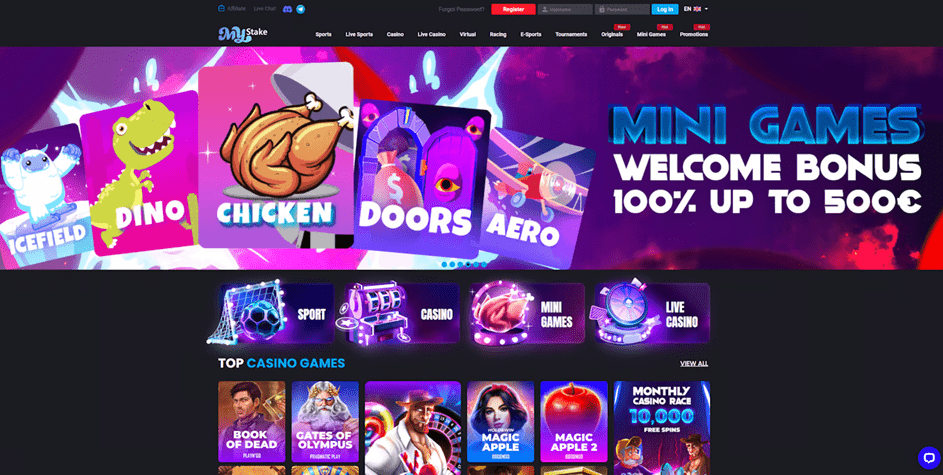
    MyStake is an online casino that offers a very broad selection of casino games supplied by some of the most well-known providers in the industry, including Pragmatic Play, Play’n GO, Hacksaw Gaming, NoLimit City, and many others. In total, the platform hosts close to 7,000 different casino titles, giving players plenty of choice across slots, table games, and other popular formats. Beyond casino games, MyStake also includes a sportsbook that covers major sports such as football, basketball, and tennis, as well as a strong lineup of esports markets, including Counter-Strike, League of Legends, Rocket League, Dota 2, and Valorant.

    Regular and active players can benefit from MyStake’s VIP loyalty program, where rewards are tied to the number of points earned through gameplay. As players progress through the VIP levels, they unlock benefits such as increased rakeback, free spins, weekly cashback, and additional perks. Users who reach VIP level 5 or higher are assigned a dedicated VIP manager to further enhance their experience. In addition to the loyalty system, new users can access a variety of promotions, including welcome bonuses, free spins, and crypto cashback offers. While MyStake supports several major cryptocurrencies, including BTC, ETH, XRP, BCH, USDT, XMR, and DASH, the overall selection of supported coins is more limited compared to some other crypto-focused casinos that also offer a wider range of stablecoins and lower-cap tokens.

    Why MyStake?

    MyStake rounds out the list as a balanced Monero casino with both casino gaming and sports betting under one roof. XMR users gain access to thousands of games, including slots, jackpots, and live dealer options, alongside a solid sportsbook. The relatively low wagering requirements make bonuses more practical to clear, while secure crypto transactions support privacy-focused play. MyStake suits Monero players looking for flexibility without unnecessary friction.

    Pros:

    • Extensive library with more than 7,000 casino games
    • Supports both fiat and cryptocurrency deposits
    • Dedicated sportsbook with regular sports betting promotions
    • Low wagering requirement for the welcome bonus, though time-limited
    • Distinct neon-themed design may appeal to some players

    Cons:

    • Limited range of supported cryptocurrencies for deposits and withdrawals
    • Total welcome bonus amount is lower than at some competitors
    • Interface can feel crowded in certain sections

    5. Betfury – 590% deposit bonus + up to 225 free spins

    Betfury

    BetFury is a crypto casino and sportsbook that combines a large gaming library with broad cryptocurrency support and a feature-rich rewards system. The platform supports more than 40 digital assets, including Bitcoin, Ethereum, Dogecoin, Solana, XRP, and the native BFG token, giving players plenty of flexibility when making deposits and withdrawals. BetFury offers access to more than 11,000 games across slots, live dealer titles, table games, instant win games, and NFT lootboxes, while its sportsbook covers a wide range of traditional sports and esports markets. New users can claim a welcome package worth up to 590% alongside up to 225 free spins spread across the first three deposits.

    One of BetFury’s standout features is its progression-based VIP and rewards system, which provides rakeback, cashback, daily bonuses, and additional perks tied to player activity. The casino also supports multiple fiat payment options, including Visa, Mastercard, Skrill, Neteller, PIX, and bank transfers, making the platform accessible to both crypto-native users and traditional players. In addition to third-party casino games, BetFury offers a selection of original in-house titles with competitive RTP rates, as well as support for wallet connections through MetaMask and TrustWallet. With its combination of casino gaming, sports betting, crypto integrations, and loyalty rewards, BetFury remains one of the more comprehensive platforms in the crypto gambling market.

    Why Betfury?

    BetFury supports a broad crypto gambling ecosystem with wallet-based login integrations including MetaMask, Trust Wallet, Phantom, TronWallet, Ton Connect, and Coin98. The platform combines more than 11,000 casino games with sportsbook and esports betting while supporting cryptocurrencies such as Bitcoin, Ethereum, BNB, TRON, Dogecoin, Litecoin, Solana, Cardano, Polygon, XRP, and Tether. Additional features include original high-RTP games, a native BFG token ecosystem, and a multi-tier VIP rewards program.

    Pros:

    • Huge library of games
    • Big selection of supported cryptocurrencies
    • Original games with high RTP
    • Well developed rank-up and VIP system
    • Native BFG token

    Cons:

    • High 40x wagering requiremenets

    6. Bets.io – 150% bonus up to 1 BTC plus 100 free spins

    Bets.io

    Bets.io is a crypto-friendly sportsbook and online casino that offers a large selection of casino games alongside a fully featured sports betting platform. Players can choose from a wide variety of slots, live casino titles, and classic table games, with content supplied by well-known providers such as Pragmatic Play, Evolution Gaming, Hacksaw Gaming, and several other major studios. On the sports betting side, Bets.io supports wagering on more than 30 different sports, covering both traditional sporting events and leading competitive esports titles.

    The platform runs a range of promotions and bonuses designed for both new and returning players. New users can benefit from a first-deposit offer that allows them to double their deposit up to 1 BTC and receive an additional 100 free spins on the Max Miner slot. Regular players can also take part in daily competitions, where it is possible to earn extra USDT prizes on top of standard casino winnings. Bets.io supports a solid lineup of cryptocurrencies, including Bitcoin, Ethereum, the USDT and USDC stablecoins, as well as a variety of popular altcoins, making it well suited for crypto-focused players.

    Why Bets.io?

    Bets.io stands out for Monero players who want maximum variety in one place. With more than 11,000 games available, including slots, live dealer tables, and crash games, it offers depth few platforms can match. XMR users benefit from fast crypto transactions, frequent tournaments, and a full sportsbook that runs alongside the casino. Its scale and liquidity make it a dependable option for higher-volume Monero play.

    Pros:

    • Well-rounded selection of crypto and fiat options
    • More than 11,000 casino games
    • Sports and esports betting features
    • Modern and responsive user interface

    Cons:

    • Only 30 days to unlock welcome bonus
    • Relatively low maximum bet during bonus playthrough ($2)
    • Restricted in many countries

    7. BC.Game – 470% bonus up to $1,600 with 400 free spins

    BC.Game

    BC.Game is a cryptocurrency casino known for having one of the sleekest and most polished designs among blockchain-based gambling platforms. The user interface is modern, highly responsive, and scales smoothly across different screen sizes, including smaller mobile displays. Despite operating entirely as a web-based platform, the touch controls feel comparable to native iOS and Android applications. Beyond its strong visual presentation and user experience, BC.Game also stands out for its large game library and generous bonus structure.

    Players can choose from thousands of games, including slots, table games, lottery-style games, and live casino titles. In addition to casino content, BC.Game features a fully integrated sportsbook that allows users to place bets on a wide range of major sporting events, from soccer to motorsports and racing. New users can access a bonus package worth up to $20,000, along with additional perks such as free spins and roll competitions. The platform also includes a progress ladder system that lets players earn points, advance through levels, and unlock higher bonus multipliers, as well as a recharge bonus that rewards subsequent deposits. BC.Game supports 18 major blockchain networks, including Bitcoin, Ethereum, Dogecoin, and XRP.

    Why BC.Game?

    BC.Game is a comprehensive option for Monero users seeking a large, feature-rich platform. The casino hosts over 9,000 games, including BC Originals, live casino titles, and slots from major providers. XMR deposits integrate smoothly into its crypto-focused cashier, and the mobile-optimized interface performs well across devices. Combined with an active promotions schedule and sportsbook access, BC.Game offers a broad Monero gambling experience.

    Pros:

    • Highly optimized and modern user interface
    • Platform performs smoothly on mobile devices
    • Wide range of supported cryptocurrencies and fiat options
    • Includes casino, sportsbook, lottery, esports, and live casino sections
    • Large game catalog with more than 9,000 titles

    Cons:

    • Native BCD token cannot be traded outside the platform
    • Free spins winnings come with high wagering requirements (60x)

    Player tips for using Monero at online casinos

    Here are some tips whether you’re looking to gamble with Monero or other cryptocurrencies online:

    • Carefully review the bonus terms and conditions, particularly wagering requirements for any bonus spins or cash. These can vary greatly by casino.
    • Always use 2-factor authentication on your casino account for an extra layer of security when logging in.
    • Only gamble with cryptocurrency you can afford to lose just like regular money. Set deposit and session loss limits for responsible play.
    • Check withdrawal limits and speed by payment method. Some sites have daily maximum payout amounts specific to cryptos.
    • Consider buying Monero on an exchange already if depositing, since some casinos charge deposit fees from on-site crypto purchases.
    • Complaint resolution procedures differ, so understand the policy if you ever face an issue with a transaction or payout. Documentation helps.
    • Monero grants pseudo-anonymity, not complete anonymity, so do not assume all traces cannot be followed by authorities if needed.

    The bottom line

    The 7 casinos highlighted above represent the cream of the crop when it comes to enjoying the best Monero betting experiences online this upcoming year. With tantalizing bonuses, anonymity, diverse game libraries, and more, you can’t go wrong in selecting any of these top-rated platforms for your crypto-gambling entertainment in 2026.

    Looking to gamble anonymously with crypto but wary of ID verification? This guide reviews the best no-KYC casinos.

  • The 9 Best ASIC Miners in 2026 – The Most Profitable ASIC Mining Rigs

    The 9 Best ASIC Miners in 2026 – The Most Profitable ASIC Mining Rigs

    Cryptocurrency mining can be a very profitable business, but succeeding in this sector requires a well-thought-out plan, a significant amount of invested capital, and knowledge of the latest trends in cryptocurrency mining. We have selected the best ASIC miners available in 2026 to help you get started on the right foot. 

    Although Bitcoin mining is the largest sector of the cryptocurrency mining industry by far, we’ve decided to also feature ASIC miners designed for algorithms other than SHA-256. This is because mining cryptocurrencies other than Bitcoin can be more profitable if timed right, and we also wanted to highlight the diversity of options in the ASIC miner space. 

    Without further ado, here is our selection of the best ASIC miners in 2026: 

    1. Bitmain Antminer S23 Hyd – Ultra-efficient hydro-cooled flagship from Bitmain
    2. Bitmain Antminer S21 XP Hyd – High-performance water-cooled miner for professional setups
    3. Bitmain Antmines S21 – A well-rounded Bitcoin miner
    4. Bitmain Antminer KS5 Pro – Best Kaspa ASIC miner
    5. Canaan Avalon Made A1466 – High-performance Bitcoin miner by Canaan
    6. MicroBT WhatsMiner M66 – Powerful SHA-256 ASIC miner by MicroBT
    7. Bitmain Antminer L9 – Best Scrypt ASIC miner
    8. Bitmain Antminer X5 – Best RandomX ASIC miner
    9. Innosilicon A10 Pro ETH – Solid EtHash miner

    The Best ASIC miners in 2026 – A closer look

    Now, let’s take a closer look at each miner that made our list of the best ASIC miners in 2026.

    1. Bitmain Antminer S23 Hyd – Ultra-efficient hydro-cooled flagship from Bitmain

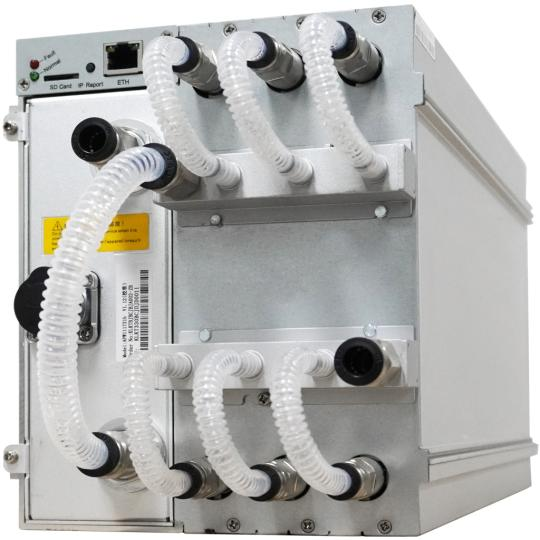
    The Bitmain Antminer S23 Hyd is a next-generation, water-cooled Bitcoin miner designed for large-scale and industrial mining setups. It delivers a powerful hash rate of 580 TH/s while drawing 5,510W of power, achieving an efficiency of 9.5 J/TH. This makes it one of the most energy-efficient SHA-256 miners available at launch.

    Released in January 2026, the S23 Hyd builds on Bitmain’s advanced liquid-cooling technology to provide improved thermal control and reduced noise compared to traditional air-cooled machines. Its design is aimed at professional mining farms that prioritize high performance, stability, and lower long-term operating costs.

    Price$17,400
    Release DateJanuary 2026
    Hash Rate580 TH/s
    Power Consumption5,510W
    Efficiency9.5 J/T

    2. Bitmain Antminer S21 XP Hyd – The most profitable Bitcoin miner

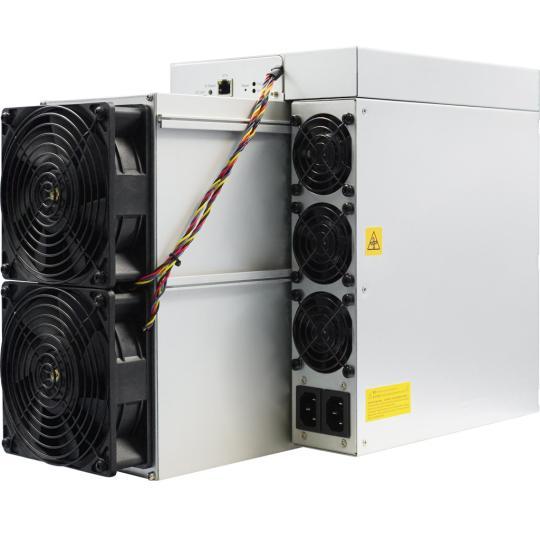
    Bitmain’s Antminer S21 XP Hyd is one of the most profitable ASIC miners for the SHA-256 hashing algorithm used by Bitcoin, Bitcoin Cash, Bitcoin SV, and other popular cryptocurrencies. This hydro-cooled miner can be cooled with antifreeze or water and outputs a hashrate of 473 TH/s with a power efficiency of 12 J/T.

    Currently, Bitmain is accepting orders for the Antminer S21 XP Hyd at a price of $10,170 per unit. Although the price per unit is high, the Antminer S21 XP Hyd still represents a large chunk of the Bitcoin mining industry, which has become much harsher after the fourth Bitcoin halving. 

    Price$10,170
    Release DateQ4 2025
    Hash Rate473 TH/s
    Power Consumption5,676W
    Efficiency12 J/T

    3. Bitmain Antminer S21 – Best all-rounder

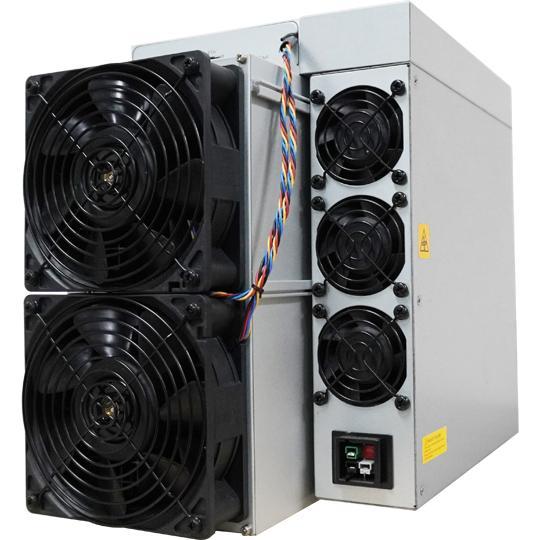
    The Bitmain Antminer S21 is one of the best all-around ASIC miners for the SHA-256 algorithm, making it suitable for mining Bitcoin, Bitcoin Cash, and similar cryptocurrencies. It delivers a hash rate of 200 TH/s while maintaining strong power efficiency at 17.5 W/Th, offering a solid combination of performance and energy savings.

    Priced at around $4,599, the Antminer S21 is a great choice for both beginners entering Bitcoin mining and experienced users looking to upgrade their setups. With its efficiency-focused design and reliable output, it provides consistent profitability potential even amid rising network difficulty.

    Price$4,599
    Release DateFebruary 2024
    Hash Rate200 TH/s
    Power Consumption3,500W
    Efficiency17.5 J/T

    4. Bitmain Antminer KS5 Pro – Best Kaspa ASIC miner

    The Bitmain Antminer KS5 Pro is currently the most powerful ASIC miner specialized for KHeavyHash, the hashing algorithm used by the Kaspa cryptocurrency. This air-cooled miner generates 21 TH/s, is rated at 3,150W and has a power efficiency of 150 J/T. 

    The Antminer KS5 Pro’s impressive power comes with a substantial price tag, as Bitmain is selling the miner at a price of $15,000 per unit.

    With Kaspa being the most profitable cryptocurrency to mine at the moment, we can expect the competition in the Kaspa ASIC miner industry to intensify significantly in the coming months.

    Price$15,000
    Release DateOctober 2024
    Hash Rate21 TH/s
    Power Consumption3,150W
    Efficiency150 J/T

    5. Canaan Avalon Made A1466 – High-performance Bitcoin miner by Canaan

    The Avalon Made A1466 is a powerful Bitcoin ASIC miner produced by Canaan. This miner outputs 150 TH/s at a power efficiency of 21.5 J/T. The Avalon Made A1466, which is the flagship model of Canaan’s A14 series, is sold for roughly $1,800 by the manufacturer.

    The Avalon Made A1466 is a solid choice for those who require a powerful Bitcoin miner at a relatively low price per unit.

    Price$1,500
    Release DateSeptember 2023
    Hash Rate150 TH/s
    Power Consumption3,230W
    Efficiency21.5 J/TH

    6. MicroBT WhatsMiner M66 – Powerful SHA-256 ASIC miner by MicroBT

    One of the best alternatives to Bitmain’s Antminer series is the WhatsMiner series produced by MicroBT. One of the company’s most powerful miners is the WhatsMiner M66. This immersion-cooled miner is sold for $4,767 by the manufacturer and outputs a hashrate of 247 TH/s. The miner has a power consumption of 5,452W and a power efficiency rating of 19.9 J/T. 

    Although this ASIC miner is certainly among the more powerful options available on the market, it also has a hefty price tag, which might not make it suitable for all miners.

    Price$4,767
    Release DateOctober 2023
    Hash Rate247 TH/s
    Power Consumption5,452W
    Efficiency19.9 J/T

    7. Bitmain Antminer L9 – Best Scrypt ASIC miner

    The Scrypt hashing algorithm is used by two of the most popular cryptocurrencies on the market – Litecoin and Dogecoin. Currently, the most effective ASIC miner for the Scrypt algorithm is Bitmain’s Antminer L9.

    The Antminer L9 generates 16 GH/s at a power consumption 3,360W and an efficiency of 210 J/G. This air-cooled miner is designed to function at an operating temperature of 75 degrees Celsius. 

    Bitmain was selling the Antminer L9 at $5,584 per unit, though the miners sold out shortly after it’s September 2025 release. 

    Price$5,584
    Release DateSeptember 2025
    Hash Rate16 GH/s
    Power Consumption3,360W
    Efficiency210 J/G

    8. Bitmain Antminer X5 – Best RandomX ASIC miner

    Although Monero’s RandomX hashing algorithm was designed to be mineable by consumer-grade computer hardware, it can also be mined with specialized hardware. Bitmain’s Antminer X5 is currently the most powerful ASIC miner for Monero.

    This miner, which Bitmain is selling for $2,999 per unit, outputs 212 KH/s and has a power consumption of 1,350W. In terms of power efficiency, this air-cooled miner is rated at 6.37 J/K. Notably, this miner features the first RISC-V architecture CPU ever produced by Bitmain. 

    Price$2,999
    Release DateSeptember 2023
    Hash Rate212 KH/s
    Power Consumption1,350W
    Efficiency6.37 J/K

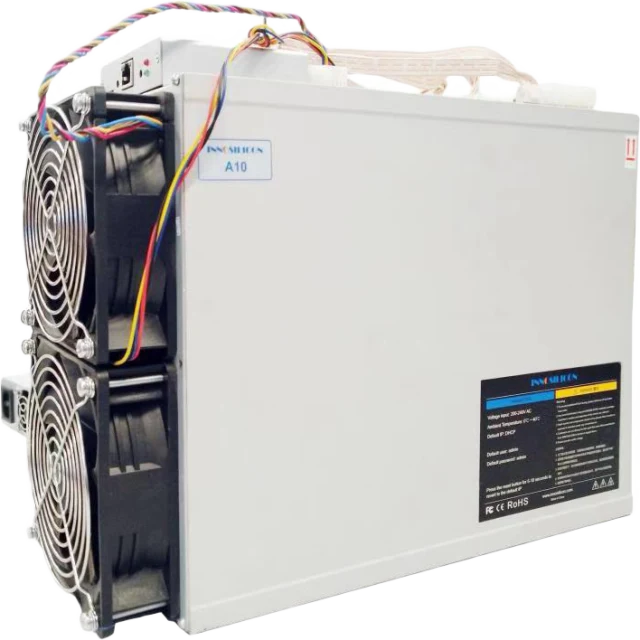
    9. Innosilicon A10 Pro ETH – Solid EtHash miner

    Although Ethereum no longer uses a Proof-of-Work consensus mechanism, there are still some notable cryptocurrencies using the EtHash hashing algorithm, for example Ethereum Classic. Innosilicon’s A10 Pro ETH is one of the most compelling options for miners that need an ASIC tailored for the EtHash algorithm. 

    The A10 Pro ETH outputs a hashrate of 500 MH/s and has a power consumption of 860W. The miner has an efficiency rating of 1.92 J/MH.

    Price$1,900
    Release DateMay 2020
    Hash Rate500 MH/s
    Power Consumption860W
    Efficiency1.92 J/MH

    FAQs

    Now that we have showcased the best ASIC miners available on the market today, let’s answer some of the most common questions users have on the topic of ASIC miners. 

    What is an ASIC mining rig?

    An ASIC mining rig is a device that is specialized to mine a specific type of cryptocurrency as efficiently as possible. ASICs (application-specific integrated circuits) are chips that are designed for a very narrow range of tasks, in contrast to the chips found in desktop computers, laptops and smartphones, which are capable of performing a variety of tasks. 

    When it comes to ASIC miners, ensuring a safe operating temperature is crucial. Depending on their design, ASIC miners can use air cooling, liquid cooling or immersion cooling.

    Are ASIC miners profitable?

    The profitability of ASIC miners depends on many different factors. This includes the cost of the ASIC miner itself, the cost of hosting and maintenance, electricity costs, the price trend of the cryptocurrency that’s being mined, and more factors. 

    Some cryptocurrencies such as Bitcoin can only be profitably mined with ASICs since consumer-grade computer hardware is not powerful enough to mine them effectively.  

    Can ASIC miners be used for anything else?

    The chips powering ASIC miners are designed specifically to mine a certain hashing algorithm as efficiently as possible. Therefore, ASIC miners can not be used for any other purpose than mining the cryptocurrency / hashing algorithm they were designed for. 

    The bottom line

    We hope that our roundup of the best ASIC miners has helped you find the best models for mining popular cryptocurrencies such as Bitcoin, Litecoin, Dogecoin, and Kaspa. Although cryptocurrency mining can certainly be profitable, running a successful mining operation requires a significant amount of capital, resources, and knowledge. 

    If you want to learn more about the topic of cryptocurrency mining, make sure to take a look at our list of the best Bitcoin mining companies to invest in.

  • The Cheapest Crypto to Transfer – Save Big on Crypto Transaction Fees

    The Cheapest Crypto to Transfer – Save Big on Crypto Transaction Fees

    Cryptocurrency is a relatively new form of digital money that has the potential to change the world. However, if we’re being realistic, many cryptocurrencies are not exactly convenient to use. High transaction costs are one of the biggest culprits for this, as sending a single transaction on Bitcoin or Ethereum can cost tens of dollars during periods of high congestion.

    Thankfully, there’s quite a few cryptocurrencies that are highly efficient and will allow you to save money on cryptocurrency transaction fees. We’ve identified the cryptos with lowest fees and compiled a list of the cheapest cryptos to transfer. 

    List of the cheapest cryptos to transfer:

    1. Solana – The fastest and most efficient smart contracts platform
    2. Stellar – Highly efficient blockchain for transferring assets
    3. XRP – A very fast cryptocurrency for value transfers
    4. Dash – Cryptocurrency designed for everyday use
    5. Dogecoin – The biggest meme coin
    6. TRON – A smart contracts platform with low fees
    7. Nano – A cryptocurrency that charges no transaction fees
    8. Zcash – A privacy coin with low transaction fees
    9. Monero – The leading privacy coin with efficient transactions
    10. Algorand – Eco-friendly and fast smart contracts platform
    11. Litecoin – A faster and cheaper counterpart of Bitcoin
    12. NEAR Protocol – A smart contracts platform with sharding technology
    13. Toncoin – A scalable crypto that’s closely integrated with Telegram

    Exploring the 13 cheapest cryptos to transfer with low transaction fees

    Here’s our list of the cheapest crypto to transfer. We tried to provide a selection that’s as diverse as possible, covering both smart contract platforms and simpler cryptocurrencies.

    1. Solana – The fastest and most efficient smart contracts platform

    Solana is a blockchain for smart contracts that is based on a highly scalable architecture. It utilizes a unique Proof-of-History mechanism combined with a Proof-of-Stake algorithm to deliver impressive throughput and very low transaction costs.

    In real-world scenarios, Solana is handling about 5,000 transactions, although the platform has displayed the ability to handle as many as 65,000 transactions per second in testing. 

    A standard transaction on Solana will only cost you about $0.023 in fees, which is some of the lowest crypto transaction fees you’ll find. More complex transactions such as NFT transfers or smart contract interactions cost slightly more, although not nearly as much as they do on Ethereum. 

    If you’re looking to explore decentralized finance, NFT protocols or blockchain-powered gaming but don’t want to spend a significant amount on money of fees, Solana is one of the strongest candidates on the market today. 

    Despite a turbulent 2022, the Solana ecosystem is still quite diverse and you’ll be able to find decentralized applications for practically every blockchain use case on the Solana blockchain. 

    2. Stellar – Highly efficient blockchain for transferring assets

    Stellar is a blockchain platform that’s focused on highly efficient asset transfers. You can use the Stellar blockchain to make transactions with the platform’s native currency XLM, or use the protocol’s built in decentralized exchange functionality to seamlessly swap between the different assets issued on the Stellar blockchain. 

    Stellar was founded by XRP co-founder Jed McCaleb and Joyce Kim. Stellar’s architecture shares a lot of similarities with the technology underpinning XRP, although the two platforms have diverged to an extent since Stellar launched in 2014. 

    When using the Stellar blockchain, you’ll usually be paying around 0.0001 XLM per transaction, which is only a fraction of a cent in USD terms. In addition to the low cost, Stellar handles transactions very quickly, as you can expect your transactions to be finalized in between 3 and 5 seconds. 

    3. XRP – A very fast cryptocurrency for value transfers

    XRP, a well-established cryptocurrency released in 2012, stands out from Bitcoin by employing the XRP Ledger Consensus Protocol instead of Proof-of-Work. This unique approach allows XRP to process transactions quickly and with very low fees.

    However, some members of the crypto community criticize XRP for potentially lacking decentralization. This is because a significant portion of the XRP supply is held by Ripple, a US-based fintech company that integrates XRP into its cross-border payment solutions. In the early days, Ripple received 80 billion XRP (80% of the supply) as a gift from the XRP founders.

    Although XRP doesn’t support smart contracts, it excels in facilitating efficient value transfers. As a result, XRP is commonly used for moving funds between different cryptocurrency exchanges.

    When setting up an XRP wallet, it’s essential to consider that each account on the XRP Ledger must maintain a reserve of at least 10 XRP, which cannot be spent.

    4. Dash – Cryptocurrency designed for everyday use

    Dash is one of the longest-running projects in the cryptocurrency space, as it made its debut already in January of 2014. Dash, which stands for “digital cash”, aims to provide a decentralized peer-to-peer currency that’s still fast and cheap enough to be suitable for every day use. 

    In fact, most of the efforts of the Dash project are focused on integrations with merchants and promoting the use of DASH for everyday purchases. 

    To achieve its impressive efficiency, Dash combines Proof-of-Work with a masternode system. Dash is also capable of providing additional privacy to transactions through its (optional) PrivateSend feature. 

    A Dash transaction will cost you less than $0.0004 in fees, and transactions can be confirmed in under 2 seconds if you utilize the InstantSend feature, which leverages Dash’s network of masternodes. 

    If you’re looking for a simple cryptocurrency to use on a daily basis, Dash is a solid option. However, the project’s relevance in the crypto market has been fading in recent years, which has hampered Dash’s adoption as a payments platform.

    5. Dogecoin – The biggest meme coin

    Dogecoin is a meme coin that made its debut back in December of 2013. Thanks to its light-hearted and humorous approach to crypto, Dogecoin quickly captured the attention of the cryptocurrency community and it remains the biggest meme coin to this day. 

    However, Dogecoin is not just a joke. It’s a fully functioning digital currency that can be used for quick and cheap peer-to-peer payments. In addition, it’s supported by an impressive number of cryptocurrency exchanges and other businesses, which means it’s not too hard to find a place where you can use your DOGE. 

    To be sure, the Dogecoin network is not quite as robust as Bitcoin. However, it still offers more than enough security for everyday transactions, and has relatively low transaction costs. 

    In most cases, you’ll be paying less than $0.033 worth of Dogecoin per transaction, although fees can increase sharply during periods of high demand. Dogecoin is also relatively fast, as it has a block time of just 1 minute. So, your Dogecoin transactions should be completed about 10 times as fast as your Bitcoin transactions. 

    6. TRON – A smart contracts platform with low fees

    TRON is a blockchain platform similar to Ethereum but utilizes a Delegated Proof-of-Stake (DPoS) consensus mechanism, enabling it to process transactions with minimal costs.

    One of TRON’s key advantages is its extremely low transaction fees compared to Ethereum, making it a preferred choice for stablecoin transactions, particularly with USDT.

    Although TRON’s decentralized application (dApp) ecosystem isn’t as expansive or diverse as Ethereum’s, it remains a viable option for those looking to engage in DeFi and other on-chain activities without incurring high transaction fees.

    7. Nano – A cryptocurrency that charges no transaction fees

    Nano is arguably the cheapest cryptocurrency to use, as it doesn’t have any transaction fees. This is enabled by Nano’s unique architecture, which doesn’t use a traditional blockchain architecture, but is instead a DAG (directed acyclic graph). In addition to practically eliminating costs, Nano’s DAG architecture also enables extremely fast transactions.

    However, you have to keep in mind that even though Nano doesn’t have any transaction fees, using it in everyday situations can be a challenge as it simply doesn’t have that much adoption. At the time of writing, Nano is ranked 204th in the cryptocurrency rankings with a relatively modest market capitalization of $74 million. 

    8. Zcash – A privacy coin with low transaction fees

    Zcash is one of the leading privacy coin options on the market. While the overall design of Zcash takes a lot of inspiration from Bitcoin (including the 21 million ZEC supply cap), it implements cutting-edge zero knowledge cryptography to enable fully private transaction.

    In Zcash, transactions can be either public or private, depending on which address you’re using. So called t-addresses are fully transparent and quite similar to Bitcoin, while z-addresses offer full privacy — nobody can see how many coins you are sending and who you are sending your coins to. 

    A Zcash transaction under typical network conditions will only cost you about $0.22 worth of ZEC, and the protocol targets a 75-second block time, which is considerably faster than Bitcoin.

    Zcash will be quite interesting to follow moving forward as there are serious plans to transition Zcash from its current Proof-of-Work consensus algorithm to a new Proof-of-Stake system. This would not only make Zcash much more environmentally friendly, but could potentially also open the door for scalability improvements which would result in faster and cheaper transactions.  

    9. Monero – The leading privacy coin with efficient transactions

    Monero is currently the largest privacy coin on the market, boasting an impressive market capitalization of around $3 billion. Monero implements a suite of privacy-protecting technologies that obfuscate the amount and destination of any given transaction. Notably, privacy on Monero is not optional – all transactions are fully private. This makes XMR a highly fungible cryptocurrency, as it’s practically impossible to tag or blacklist specific XMR coins. 

    Despite its very strong privacy features, Monero is very efficient to transact with. Sending XMR will cost you less than $0.13 in fees, and the relatively swift block time of 2 minutes means you won’t need to wait too long for your transaction to complete. 

    However, you shouldn’t expect any fancy smart contracts feature from Monero, as the project is laser-focused on enabling straightforward peer-to-peer value transfers that are as private as possible. 

    10. Litecoin – A faster and cheaper counterpart of Bitcoin

    Having launched already in October of 2011, Litecoin is one of the most established cryptocurrency projects on the market. Litecoin is similar to Bitcoin in many respects, although it implements a number of key tweaks designed to make it more efficient and suitable for everyday use. 

    Compared to Bitcoin, Litecoin has a 4x larger supply cap (84 million LTC) and a 4x faster block time (about 2.5 minutes). In addition, it uses the Scrypt hashing algorithm, instead of the SHA-256 algorithm Bitcoin is based on.

    If you’re already comfortable with using Bitcoin, Litecoin will feel extremely familiar to use. When sending LTC, you’ll typically be paying only about $0.01 in fees, and your transaction will be confirmed faster thanks to the quicker 2.5 minute block time. 

    11. Algorand – Eco-friendly and fast smart contracts platform

    Algorand is a blockchain platform designed for smart contracts that operates on a Proof-of-Stake consensus algorithm. Founded in 2017 by Silvio Micali, a renowned computer scientist known for his contributions to cryptography, the Algorand project launched its mainnet in 2019. Over time, the platform has been upgraded to enhance its smart contract capabilities and support the issuance of custom tokens.

    Algorand prides itself on being eco-friendly and efficient, with a focus on offering low transaction fees. The minimum transaction fee is 0.001 ALGO, meaning that 1 ALGO can potentially cover 1,000 transactions. 

    This feature makes Algorand an attractive option for users interested in exploring use cases like NFTs (Non-Fungible Tokens) and DeFi (Decentralized Finance) without having to contend with the high transaction fees associated with Ethereum and other platforms.

    12. NEAR Protocol – A smart contracts platform with sharding technology

    NEAR Protocol is a layer-1 blockchain that employs a sharding mechanism called Nightshade alongside a Proof-of-Stake consensus algorithm. It is designed to drive the mass adoption of web3 by offering strong scalability and developer-friendly features.

    The project envisions NEAR as a web3 operating system, allowing developers to build applications in widely used languages like JavaScript while leveraging community-built components for greater efficiency. Additionally, NEAR makes onboarding easy even for users who don’t yet own cryptocurrency, making it an accessible entry point into web3.

    Transactions on NEAR Protocol finalize in under three seconds and cost less than $0.01 in fees. As the Nightshade sharding implementation continues to evolve, NEAR’s scalability is expected to improve even further.

    For those seeking an efficient smart contract platform, NEAR Protocol stands as a strong alternative to more established options like Solana and Polygon.

    13. Toncoin – A scalable crypto that’s closely integrated with Telegram

    Toncoin is the native cryptocurrency of the TON Blockchain, a Proof-of-Stake network designed with multiple scaling technologies to support large-scale adoption.

    TON relies on a Proof-of-Stake consensus mechanism run by validator nodes. While anyone can become a validator, doing so requires a substantial amount of Toncoin. Token holders who do not run their own nodes can participate as nominators by delegating their TON to validators, helping them meet the required staking threshold.

    Although the network now operates on Proof-of-Stake, TON’s initial coin distribution was carried out through mining to ensure a fair launch.

    The project is based on technology originally developed by the team behind the Telegram messaging app. They created a blockchain called The Open Network but halted development due to regulatory challenges. Today, TON is community-led and independent from Telegram. However, the Telegram app continues to integrate Toncoin, most recently through Telegram-based clicker games and other in-app features.

    The TON Blockchain is highly efficient and cost-effective. A standard TON transaction costs around 0.0008 TON in fees, which is under $0.001 at current prices. Sending TON-based tokens, known as Jettons, costs slightly more at about 0.037 TON, or roughly $0.49.

    Toncoin is a practical choice for low-cost crypto transfers. It is listed on most major cryptocurrency exchanges and can also be used directly within the Telegram app. The network also supports the USDT stablecoin, further expanding its usefulness for everyday transactions.

    Transaction fee comparison

    Let’s take a look at how the cryptocurrencies we have featured square up against each other. As you can see, all of them are inexpensive to use, with some having practically negligible transaction costs. Please note that the transaction fees and speeds are estimates of what you can expect during normal network conditions. If there is a surge in demand for the blockchain you’re using, transaction costs will be higher, and speeds will be lower.

    Native AssetMarket Cap*Transaction FeesTransaction speed
    SolanaSOL$44.50 billion$0.033 seconds
    StellarXLM$5.13 billionLess than $0.013-5 seconds
    XRPXRP$82.57 billionLess than $0.013-5 seconds
    DashDASH$423.9 millionLess than $0.011-2 seconds
    DogecoinDOGE$15.4 billion$0.0051 minute (1 confirmation)
    TRONTRX$26.2 billionLess than $13 seconds
    NanoXNO$73.7 millionNo feesUnder 1 second
    ZcashZEC$3.80 billion$0.0275 seconds (1 confirmation)
    MoneroXMR$6.05 billionLess than $0.052 minutes (1 confirmation)
    AlgorandALGO$785.1 millionLess than $0.013 seconds
    LitecoinLTC$3.98 billion$0.012.5 minutes (1 confirmation)
    NEAR ProtocolNEAR$1.21 billionLess than $0.013 seconds
    ToncoinTON$3.31 billionLess than $0.0013-5 seconds

    The bottom line

    Hopefully, we helped you identify the best options available if you’re looking to send cryptocurrency with the lowest transaction fees. The cheapest crypto to send will allow you to make transactions at a cost of a fraction of a cent, and have your payments completed in a matter of seconds.

  • 15 Best Altcoins to Buy: Top Altcoin Picks for 2026

    15 Best Altcoins to Buy: Top Altcoin Picks for 2026

    The world of cryptocurrencies has witnessed explosive growth over the past decade, with Bitcoin taking center stage. However, the landscape of digital currencies also includes a diverse array of altcoins, some of which offer very exciting opportunities for investors.

    By definition, altcoins, or alternative cryptocurrencies, are digital assets that evolved after the pioneering of Bitcoin. These emerging cryptocurrencies often introduce innovative features or aim to solve specific problems. It is also because of these unique use cases that altcoins tend to be a riskier, yet at the same time also potentially more lucrative investment.

    The best altcoins to buy in 2026:

    1. Ethereum – The largest altcoin and the crypto of the leading smart contract blockchain
    2. Zcash – Established privacy-focused cryptocurrency
    3. XRP – The leading blockchain for international money transfers
    4. Solana – A fast and low-cost blockchain for decentralized apps and finance
    5. BNB – The largest Exchange token and the top challenger to Ethereum’s DeFi supremacy
    6. Litecoin – A Bitcoin fork aimed at minimizing the cost of transactions
    7. Monero – Veteran privacy coin offering advanced transaction privacy
    8. Optimism – A leading Layer 2 scaling solution for Ethereum’s network
    9. Render Token – The native token of Render, the leading decentralized GPU power platform
    10. Aptos – A revolutionary and highly scalable enterprise-grade Layer 1 blockchain
    11. Shiba Inu – The second most popular meme cryptocurrency
    12. Gram – A high-performance blockchain initially developed by Telegram
    13. Aster – Native token of the Aster DEX
    14. Hyperliquid – Highly efficient DEX with leveraged trading
    15. Bittensor – A leader in decentralized AI and machine learning

    Top 15 Altcoins to Invest in Now: Exploring the Best and Newest Altcoins in 2026

    In this article, we delve into the top altcoins of 2026 and highlight each coin’s unique features, development progress, and potential for growth. By exploring the innovative altcoins on the rise, we aim to provide insights into the evolving landscape of cryptocurrencies and offer a fresh perspective on the best investment opportunities available in 2026.

    1. Ethereum – The largest altcoin and the native asset of the leading smart contract blockchain

    As the second-largest cryptocurrency and the largest and dominant DeFi platform, Ethereum (ETH) is an essential component of every altcoin-oriented portfolio.

    Ethereum is an open-source blockchain that pioneered smart contract functionality in 2015. While the Ethereum network can also facilitate transfers of value between different Ethereum addresses, its key added value is in the execution of various smart contracts. Throughout their existence, Ethereum’s smart contract capabilities have facilitated numerous blockchain-powered innovations such as ICOs, DeFi, NFTs, and DAOs. In addition to the native asset (Ether), the Ethereum network hosts numerous ERC20 tokens (from exchange tokens to DeFi tokens and stablecoins), which further extend the Ethereum environment’s reach, liquidity, and utility.

    With its successful transition to Proof-of-Stake and upcoming scalability improvements, Ethereum has become significantly more energy-efficient and is poised for increased transaction capacity.

    Despite countless challengers, such as Cardano, Solana, TRON, and Cosmos, some of which were even dubbed “potential Ethereum killers”. Nevertheless, to this day, Ethereum still reigns supreme as the leading smart contract platform. In fact, Ethereum takes the top spot with a substantial margin in terms of total value locked, leaving all other competitors far behind.

    Why is Ethereum a good altcoin to buy in 2026?

    Ethereum remains the core platform for smart contracts, supporting much of the activity across DeFi, NFTs, tokenization, and decentralized applications. The shift to Proof-of-Stake reduced energy consumption and created a foundation for ongoing scalability improvements. Upcoming upgrades, including danksharding and deeper Layer-2 integration, are designed to lower transaction costs and improve throughput while preserving the network’s security and decentralization.

    Ethereum also benefits from strong network effects. Many of the largest DeFi protocols, stablecoins, and tokenization projects continue to operate on Ethereum or its Layer-2 networks, sustaining demand for ETH as a utility asset. As Layer-2 adoption grows, more transactions ultimately settle on Ethereum, reinforcing its role as the base settlement layer and supporting demand for ETH in staking and fees. Combined with increasing institutional exposure and sustained interest in ETH ETFs, Ethereum is often viewed as one of the more stable large-cap altcoins looking ahead to 2026.

    2. Zcash – Established privacy-focused cryptocurrency

    Zcash is a decentralized, peer-to-peer cryptocurrency launched in 2016. It follows a Bitcoin-like design while adding additional privacy and security functionality that is uncommon among public blockchains.

    ZEC was the first cryptocurrency to integrate zk-SNARKs, a zero-knowledge proof system that allows transactions to be verified without revealing sensitive details. This technology has been widely cited as a major advancement in cryptography and blockchain privacy.

    New ZEC enters circulation through mining, as the network currently uses a Proof-of-Work (PoW) consensus mechanism. Zcash has a fixed supply of 21 million coins and follows a halving-based issuance model similar to Bitcoin’s. Long-term, the project has discussed a potential transition to Proof-of-Stake, with both the Electric Coin Company and parts of the community expressing support for such a shift.

    Why is Zcash a good altcoin to buy in 2026?

    Zcash offers users a choice between transparent transactions and privacy-preserving “shielded” transfers, allowing it to serve different use cases within the same network. This optional privacy approach differentiates Zcash from fully transparent blockchains while avoiding the mandatory privacy model used by some other privacy-focused coins.

    Interest in ZEC has increased alongside renewed attention on privacy-related cryptocurrencies, driven by broader conversations around data protection, financial surveillance, and digital autonomy. With a long operating history, recognizable brand, and established cryptographic foundation, Zcash remains a relevant option for investors considering privacy-enabled assets going into 2026.

    3. XRP – The leading blockchain for international money transfers

    Launched in 2012, Ripple (XRP) is a cryptocurrency developed by David Schwartz, Jed McCaleb, Arthur Britto, and Chris Larsen. Up to this day, the majority of XRP supply is placed in escrow accounts owned by Ripple Labs, initially known as the OpenCoin company.

    The Ripple Network utilizes the Ripple Protocol Consensus Algorithm (RPCA), which relies on trusted validators instead of independent decentralized nodes to validate transactions and secure the blockchain. This allows Ripple to offer fast and low-cost transfers, particularly suitable for remittances and international payments. Naturally, Ripple has also integrated XRP into most of its products, including On-Demand Liquidity (ODL), which facilitates efficient cross-border money transfers in collaboration with cryptocurrency exchanges.

    Why is XRP a good altcoin to buy in 2026?

    XRP remains a well-established asset in the cross-border payments space, built to support fast and low-cost international transfers for banks, fintech companies, and payment providers. Transactions on the XRP Ledger typically settle within seconds, offering a more efficient alternative to traditional systems such as SWIFT. As interest in blockchain-based settlement solutions continues to expand, XRP’s long-standing focus on enterprise payments keeps it relevant looking toward 2026.

    Regulation remains a key factor shaping XRP’s outlook. Ripple’s extended legal dispute with the U.S. Securities and Exchange Commission has weighed on XRP’s market performance in recent years, but the regulatory environment in the United States has shifted following the 2024 elections. A more accommodating stance toward digital assets is contributing to greater regulatory clarity and has supported the introduction of XRP exchange-traded products, which Ripple executives have positioned as a logical step after Bitcoin and Ethereum ETFs. Continued regulatory easing could improve XRP’s ability to attract institutional interest and support broader adoption over the longer term.

    4. Solana – A fast and low-cost blockchain for decentralized apps and finance

    Solana is a blockchain platform best known for its scalability and efficiency. With a remarkable throughput of 65,000 transactions per second (TPS) and low fees, it poses strong competition to Ethereum. Solana achieves this through an innovative proof-of-history consensus algorithm and timestamping system.

    This scalability has made Solana a preferred choice for NFT projects and decentralized finance applications. The platform’s backing from prominent investors like Polychain and Andreessen Horowitz provides the necessary resources for future ecosystem development, making it even more attractive to blockchain developers and also investors.

    Why is Solana a good altcoin to buy in 2026?

    Solana is widely used as a high-throughput blockchain, known for fast transaction speeds and low fees that support use cases ranging from DeFi and NFTs to payments and gaming. The network is designed to handle thousands of transactions per second, making it suitable for applications that require speed and low latency. As more developers focus on performance-oriented applications, Solana continues to be viewed as a practical alternative to Ethereum for certain use cases.

    The Solana ecosystem has also seen renewed activity. Growth in DeFi usage, increased stablecoin volumes, and sustained interest in memecoin trading have driven higher network utilization. Projects such as Jupiter and Tensor, along with a growing number of consumer-focused applications, have contributed to Solana’s positioning as a platform with active user engagement. If this momentum continues and developer adoption remains strong, SOL is likely to remain a closely watched large-cap altcoin through 2026.

    5. BNB – The largest exchange token and Ethereum’s top challenger

    BNB is a cryptocurrency that was launched by Binance, one of the largest cryptocurrency exchanges in the world. Initially called the Binance Coin, this ERC-20 standard token was used to pay for trading fees and other services on the Binance exchange with a discount. However, Binance launched its own blockchain, the Binance Chain, in April 2019, and BNB was migrated from the Ethereum blockchain to the Binance Chain shortly thereafter.

    This is how BNB became the native asset of the BNB chain and was granted a whole new range of utility. The BNB chain is a smart chain that facilitates fast transactions and lower fees compared to the Ethereum network, which made it a popular choice among users and developers. BNB has a limited supply of 200 million coins.

    Why is BNB a good altcoin to buy in 2026?

    BNB remains a prominent large-cap cryptocurrency, closely tied to the broader Binance ecosystem and BNB Chain. The token has several utility roles, including discounted trading fees on Binance, transaction and smart contract fees on BNB Smart Chain, and use across a wide range of decentralized applications, DeFi platforms, and blockchain-based games. Its integration across multiple products and services has helped sustain consistent on-chain and exchange-related demand.

    BNB Chain continues to attract developer activity, supported by regular network upgrades and ongoing application launches. Low transaction costs and stable performance make the network accessible for teams building scalable applications. Binance’s global reach also contributes to BNB’s liquidity and availability across markets. With continued ecosystem development and steady usage, BNB is often viewed as one of the more utility-driven large-cap altcoins looking ahead.

    6. Litecoin – A Bitcoin fork aimed at minimalizing the cost of transactions

    Litecoin, one of the earliest altcoins launched in October 2011, is heavily based on Bitcoin’s codebase as it emerged through a direct fork of the Bitcoin chain. While Litecoin shares a lot of similarities with Bitcoin, such as using Proof-of-Work for consensus, it also has several key differences that offer some notable advantages over Bitcoin. If Bitcoin is considered to be “digital gold”, then Litecoin is without a doubt “digital silver”.

    Litecoin is often favored for its lower transaction costs and faster processing, making it a more practical choice for everyday payments. Litecoin also utilizes a different cryptographic hash algorithm: the script hash function as opposed to Bitcoin, which makes use of the SHA-256. Litecoin has a four times higher maximum coin supply (84 million) and a faster block time of 2.5 minutes. Litecoin also supports MimbleWimble privacy technology, which Bitcoin doesn’t.

    Why is Litecoin a good altcoin to buy in 2026?

    Litecoin continues to be widely used for payments, particularly for transfers that benefit from faster settlement and lower fees compared to Bitcoin. It is supported by most major cryptocurrency exchanges, wallets, and payment processors, making it one of the most accessible digital assets for everyday transactions. Litecoin has also been used as a testing ground for upgrades later adopted by Bitcoin, including Segregated Witness (SegWit) and Lightning Network integrations.

    While Litecoin does not rely on rapid feature expansion or aggressive marketing, its longevity and consistent uptime have helped it maintain relevance in a crowded market. Ongoing developments around privacy enhancements, such as optional MimbleWimble-based transactions, add flexibility for users who value transaction confidentiality. With its established brand, predictable monetary policy, and continued use as a payment-focused network, Litecoin remains a consideration for investors looking at established cryptocurrencies heading into 2026.

    7. Monero – Veteran privacy coin offering advanced transaction privacy

    Monero is a community-driven cryptocurrency that launched in 2014, originally emerging from a Bytecoin-based codebase. The project did not conduct an ICO or pre-mine, resulting in a distribution model centered on open mining participation. Since its launch, Monero’s technology has evolved significantly, and the network now differs substantially from its early implementations.

    Privacy is central to Monero’s design. The protocol uses a combination of ring signatures, stealth addresses, and confidential transactions to obscure sender, receiver, and transaction amount data. These features prevent third parties from tracing payments and ensure that all XMR units are fully fungible, as transaction histories cannot be distinguished on-chain.

    Monero is mined using the RandomX algorithm, which is designed to resist ASIC mining and favor general-purpose hardware. This approach aims to reduce mining centralization by allowing individuals to participate using consumer-grade CPUs, rather than specialized equipment.

    Why is XMR a good altcoin to buy in 2026?

    Monero functions as a digital payment system that prioritizes privacy and self-custody, enabling users to transact without intermediaries or on-chain exposure of financial data. Its privacy guarantees make XMR suitable for use cases where confidentiality and censorship resistance are important, including personal payments and financial privacy preservation.

    Interest in privacy-oriented cryptocurrencies has increased alongside broader discussions around surveillance, data protection, and transaction monitoring. As one of the longest-running privacy-focused networks with active development and a large user base, Monero continues to occupy a central position in this segment. With its consistent track record and well-established technology, XMR remains a key asset to watch among privacy-focused cryptocurrencies heading into 2026.

    8. Optimism – A leading Layer 2 scaling solution for Ethereum’s network

    Optimism is an Ethereum layer 2 solution that utilizes Optimistic Rollups technology to alleviate the congestion on the layer 1 blockchain. By offloading a significant portion of transaction and computation data, Optimism enables faster and more cost-effective operations. This scalability enhancement opens up new possibilities for decentralized finance (DeFi), non-fungible tokens (NFTs), gaming, and other use cases that can become prohibitively expensive when executed on the main Ethereum chain.

    The Optimism (OP) token was introduced in May 2022 and serves as the native token and governance token of the Optimism protocol. Holders of OP gain the ability to participate in crucial decision-making processes concerning project incentives, protocol upgrades, and the allocation of treasury funds. The OP token was launched simultaneously on various cryptocurrency exchanges, including Binance and KuCoin, recognized as reputable platforms and the best places to buy altcoins.

    Why is Optimism a good altcoin to buy in 2026?

    Optimism is a promising altcoin investment for 2026 due to its significant transaction growth, scalability advantages over Ethereum, and unique governance mechanics. The Optimism network saved over $1 billion in gas fees since its launch, and this number will only keep growing as more DeFi and blockchain gaming projects build on Optimism or migrate to this cheap and efficient Ethereum Layer 2 network.

    In addition, Optimism recently underwent the Bedrock upgrade, which significantly reduced transaction fees (up to 47%), provided greater network security, and enhanced Optimism’s compatibility with Ethereum. Because of all these developments, Optimism deserves its spot on our list of the best altcoin investments you can make in 2026.

    9. Render Token – The native token of the leading decentralized GPU-powered platform

    Render Token (RNDR) is the utility token of The Render Network, a pioneering provider of decentralized GPU-based rendering solutions. As an ERC-20 token, RNDR serves as the primary means of payment for animation, motion graphics, and VFX rendering on The Render Network.

    The Render Network operates through a synergistic combination of three essential components: creators, node operators, and OctaneRender. By leveraging the Render Network, creators gain access to the immense computing power of GPUs, enabling them to render final images at significantly faster speeds and reduced costs compared to traditional methods. Node operators play a crucial role by renting out their unused GPU capacity to creators. In exchange for their contribution, node operators receive RNDR tokens as compensation for the time spent rendering. This decentralized model allows for the seamless integration of GPU compute power and establishes a connected economy of 3D assets within The Render Token network.

    Why is Render Token a good altcoin to buy in 2026?

    The biggest advantage of The Render Network and the associated Render Token is that the project offers a solution to a real-world issue. The Render Network creates a decentralized marketplace for GPU power, which has not existed before. In addition, both creators, as well as owners of powerful GPUs, can benefit from using The Render Network. In addition, the need for GPU power and, thereby also, Render Network’s services could surge in the near future because of the rapidly growing adoption of AI-powered tools. Certain aspects of prominent AI technologies like ChatGPT rely heavily on substantial GPU resources, which can be effectively harnessed through the Render Network’s crowdsourcing approach.

    In fact, The Render Network has already integrated the Stable Diffusion deep learning model, which allows users to generate AI-created renderings using decentralized GPU power. To conclude, The Render Network stands at the very forefront of transformative technology and fills in a very specific market segment with its unique GPU-sharing solution.

    10. Aptos – A highly scalable enterprise-grade Layer 1 blockchain and one of the best new altcoins

    Aptos, a novel cutting-edge layer 1 blockchain, seeks to revolutionize the internet and facilitate a seamless transition from Web2 to Web3. Developed by former Meta (previously known as Facebook) employees who were involved in the Diem stablecoin project (initially called the Libra project), Aptos showcases high levels of innovation.

    Although Aptos is a relatively new player in the cryptocurrency industry, this super-efficient blockchain has already left an undeniable impact since its mainnet launch in October 2022. With the ability to process up to 100,000 transactions per second (TPS), Aptos surpasses the transaction capacities of prominent cryptocurrencies like Bitcoin and Ethereum, as well as traditional payment processors such as Mastercard and Visa.

    Why is Aptos a good altcoin to buy in 2026?

    Aptos stands out as a compelling altcoin investment due to its impressive capabilities, such as the blockchain’s remarkable throughput and low latency. In fact, Aptos boasts a median Time to Finality (TTF) value of less than a second, which makes it one of the fastest major blockchain networks. In addition, Aptos is developed by experienced ex-Meta developers and incorporates several innovative scaling solutions like internal and homogeneous state sharding, which further enhance its performance.

    Aptos’ design is modular, which allows frequent and seamless deployment of upgrades. Last but not least, Aptos enjoys strong financial support from major crypto investors, including Binance Labs and Jump Crypto. This backing not only provides valuable resources but also adds credibility to the project. All these factors make Aptos a highly promising cryptocurrency poised for success in the ever-evolving blockchain landscape.

    11. Shiba Inu – The second most popular meme cryptocurrency

    Shiba Inu (SHIB) emerged in August 2020 as a blockchain platform, originally conceived as an experiment in decentralized community development. However, the project’s amazing initial performance quickly captured the attention of the market. The investments and developmental efforts have, over time, transformed Shiba Inu from a mere experimental blockchain into a fully operational ecosystem accommodating various decentralized applications.

    Within this ecosystem, you can find the native ShibaSwap decentralized exchange, the SHIB Burning Portal, as well as several NFT and metaverse projects. Supporting this thriving ecosystem are three tokens: SHIB, LEASH, and BONE. SHIB, which is the primary incentive token of the platform, is firmly positioned within the top 25 cryptocurrencies in terms of market capitalization. The project is overseen by a pseudonymous figure called Shytoshi Kusama, who serves as a volunteer project lead, and boasts an extensive social media following known as the “Shib Army.”

    Why is Shiba Inu a good altcoin to buy in 2026?

    Shiba Inu (SHIB) has the potential to generate strong returns due to factors such as the upcoming launch of a Layer 2 network called Shibarium, which will improve transaction speed and reduces the costs of transactions and the operational costs of the network in general. In fact, Shibarium’s testnet called “Puppynet” is already live and is showing some promising activity with over 20,000,000 transactions and 16,700,000 unique wallet addresses interacting with this layer 2 test network in the first month of its existence.

    Shibarium will also further lower the barrier to entry into the Shiba Inu environment, which could potentially open the doors to decentralized gaming and NFT projects. When fully deployed, Shibarium will utilize the BONE token for gas fees, but the BONE proceeds will be used to purchase and burn SHIB. Additionally, the “Shib Army” seems dedicated to burning as many SHIB tokens as possible through SHIB burning parties. Both of these burning “mechanisms” could actually decrease the SHIB supply enough to drive up the token’s value. SHIB is also one of the best cheap altcoins to buy in 2026.

    12. Gram – A high-performance blockchain initially developed by Telegram

    Gram (prev. Toncoin) is a third-generation proof-of-stake blockchain designed for rapid and efficient transactions. GRAM’s development started in 2018. At that time, the project was led by the Durov brothers, the founders of Telegram Messenger, and the TON acronym stood for Telegram Open Network.

    In October 2019, Telegram faced significant legal challenges in the form of a lawsuit filed by the United States Securities and Exchange Commission (SEC). The SEC alleged that the initial coin offering (ICO) conducted by Telegram to fund TON violated securities laws. As a result of the lawsuit, Telegram decided to halt the development of TON, and the project did not fully launch as originally intended. Nevertheless, users and developers joined forces to form an open TON community, which has since supported and continued the project’s development. Toncoin (TON) serves as the native cryptocurrency of The Open Network.

    Why is TON a good altcoin to buy in 2026?

    Toncoin (TON) represents a compelling altcoin investment opportunity, driven by recent developments surrounding The Open Network. In April 2023, The Open Network achieved integration with Telegram, the company that initially spearheaded TON’s development. This integration introduced a new crypto feature, enabling users to purchase a premium subscription using Toncoin (TON) directly within the Telegram platform. This move indicates that Telegram has not abandoned The Open Network and suggests the potential for further utilization of TON within Telegram or other platforms in the future.

    Moreover, in May 2023, The Open Network (TON) launched the TON Accelerator Program, which will allocate up to $25 million in funding to projects within the TON ecosystem. The primary focus of the program is to support key projects, especially those in the decentralized finance (DeFi) sector, with investments ranging from $50,000 to $250,000 per project. The program not only provides funding but also offers partnerships and mentorship. Accelerator partners such as Gotbit, Web3port, Tonstarter, TEB, and Cypher Capital will contribute their expertise to the program, further enhancing its potential for success.

    13. Aster – Native token of the Aster DEX

    Aster is a decentralized protocol designed to support an open marketplace for artificial intelligence services. The platform is built on a modular structure, where individual AI modules specialize in areas such as natural language processing, data analysis, and predictive modeling. These modules operate independently while contributing to a shared ecosystem of AI-powered tools.

    The network uses an evaluation mechanism that allows participants to assess the performance and usefulness of AI models available on the platform. Models that demonstrate stronger results and higher reliability can gain greater visibility and earn more rewards, helping guide the development of the broader ecosystem over time.

    Computational tasks such as running and training AI models are handled by node operators, who provide hardware resources in exchange for Aster’s native token. Users access AI services by paying with the same token, creating a usage-based incentive structure that supports ongoing development, infrastructure maintenance, and model improvement.

    By combining decentralized infrastructure with AI-focused tooling, Aster aims to provide a scalable and cost-efficient environment for deploying and accessing artificial intelligence services without relying on centralized providers.

    Why is Aster a good altcoin to buy in 2026?

    Aster sits at the intersection of two growing sectors: decentralized finance and artificial intelligence. As demand for AI-driven services increases, decentralized alternatives that allow transparent access, open competition, and permissionless participation may attract greater attention. Aster’s token plays a central role in this system by coordinating payments, rewards, and network participation.

    If decentralized AI continues to gain traction as an alternative to centralized platforms, Aster could benefit from increased usage across its marketplace and infrastructure layers. With a clear utility model tied to computation and service access, Aster remains a project to watch among AI-focused blockchain tokens heading into 2026.

    14. Hyperliquid – Highly efficient DEX with leveraged trading

    Hyperliquid is a blockchain platform specifically designed to handle decentralized trading with high efficiency, resulting in low fees and minimal slippage. Thanks to its focused design, the Hyperliquid platform can handle around 100,000 orders per second and delivers an experience similar to using a centralized crypto exchange.

    At the time of writing, Hyperliquid can be used to trade more than 30 different cryptocurrencies, and the platform allows traders to access leverage of up to 50x. On top of that, Hyperliquid also provides a copy trading functionality, which is practically unheard of in the decentralized exchange landscape.

    The Hyperliquid platform has its own native token called HYPE, which was introduced in November of 2024 through an airdrop to over 90,000 traders. The airdrop allocated a significant portion of the HYPE token supply to the Hyperliquid userbase and had no venture capital participation, which resulted in a positive reception from the crypto community.

    Why is Hyperliquid a good altcoin to buy in 2026?

    While decentralized exchanges have been steadily growing in popularity in recent years, the user experience on most DEXes is still rather clunky when compared to top-tier centralized trading platforms such as Binance and Coinbase. Hyperliquid is a DEX that can truly rival centralized exchanges in terms of user experience and offers easy access to leveraged trading.

    If we also consider the platform’s HYPE token, which has been received very positively by the crypto community, Hyperliquid is a project that all crypto investors and traders should have on their radar in 2026.

    Recently, the Hyperliquid team introduced staking utility for the HYPE token. The feature allows HYPE holders to stake their tokens and contribute to the security of the network while earning additional HYPE tokens in return. This staking functionality makes HYPE an even more attractive proposition than before, and positions the token well if there will indeed be an altseason in 2026.

    15. Bittensor – A leader in decentralized AI and machine learning

    Bittensor is a platform designed to provide a peer-to-peer marketplace for artificial intelligence and machine learning. The Bittensor platform supports a diverse range of AI and ML-powered applications, as it consists of over 60 subnets specialized for specific tasks (for example image generation, voice generation, geospatial AI, protein folding and more).

    The Bittensor platform incorporates the Yuma consensus protocol, in which validators on the network’s subnets can prioritize what the network should learn.

    In Bittensor, miners provide the computational resources for machine learning tasks, and earn TAO tokens in return. Users who want to access this computational power have to pay with TAO as well.

    Why is TAO a good altcoin to buy in 2026?

    Bittensor is a fascinating altcoin for those who are banking on a 2026 altseason because it’s positioned in both AI (artificial intelligence) and dePIN (decentralized physical infrastructure networks), which are two of the most exciting investment themes in crypto at the moment.

    The Bittensor network already consists of 64 subnets, allowing the platform to be extremely flexible. In addition, Bittensor can quickly adapt to the emergence of new use cases for AI and ML by introducing new specialized subnets.

    We can expect Bittensor to remain highly relevant if there is an altseason in 2026, but TAO could be a good long-term hold even if the markets surprise us with a more bearish turn.

    The bottom line: You should also consider these things when picking your next altcoin investment for 2026

    While we have featured only the top 15 best altcoins for 2026, there is a plethora of other cryptocurrencies available, some of which might even be a better fit for some specific types of investors. This is because the investment decisions of each individual investor are ultimately based on his/her own financial goals and risk tolerance. Investors with a very high-risk tolerance might consider exploring more speculative investments or even try to successfully identify the next Shiba Inu in their hunt for substantial returns. More reserved investors, on the other hand, will steer clear of highly volatile memecoins but likely find more sense in buying cryptocurrencies with strong long-term potential.

    Anyhow, if you try to identify the next potentially lucrative altcoin on your own, make sure to do your own research (DYOR). To successfully weed out scams and pump-and-dump projects that are doomed to fail, it is necessary to take several factors into account. These include, but are not limited to, the development team, the underlying technology, potential use cases, and market demand and adoption of the project’s solution.

  • Top 5 Cryptocurrencies To Buy In 2023: Caged Beasts, Monero, Cosmos, Litecoin and Avalanche

    ​If you’re on the lookout for cryptocurrencies that have the potential to deliver 10 times or more returns on investments, consider exploring Monero (XMR), Cosmos (ATOM), Litecoin (LTC), Caged Beasts (BEASTS), and Avalanche (AVAX). These cryptocurrencies have established themselves in the crypto market and offer compelling reasons why they are worth considering as investment options.

    Altcoins Rule The Market

    Monero, known for its emphasis on privacy and anonymity, has gained recognition for its secure and untraceable transactions. With a dedicated community and a focus on privacy features, Monero has positioned itself as a prominent player in the crypto space. As the demand for privacy-focused cryptocurrencies grows, Monero could present an opportunity for significant returns.

    Litecoin, often referred to as the silver to Bitcoin’s gold, has long been recognized as one of the top cryptocurrencies. Offering faster transaction speeds and lower fees than Bitcoin, Litecoin has gained popularity and widespread acceptance as a means of payment. Its established reputation and longevity in the crypto market make it an attractive option for investors seeking potential returns.

    Get In On The Blockchain Action

    Cosmos, a blockchain interoperability platform, aims to enable seamless communication and exchange of data between different blockchains. Cosmos seeks to unlock new possibilities in decentralized finance (DeFi) and cross-chain applications by providing a solution to the interoperability challenge. With its innovative technology and partnerships, Cosmos stands as a promising investment prospect.

    Avalanche, a decentralized platform for launching DeFi applications, has emerged as a promising contender in the crypto space. With its high scalability, low fees, and fast transaction confirmations, Avalanche aims to address the limitations of existing blockchain networks. Its growing ecosystem and increasing adoption suggest the potential for significant growth and investment opportunities.

    What Makes Caged Beasts Unique?

    Caged Beasts are unique in that receiving a return on investment depends entirely on referral instead of staking tokens. For example, users may establish a referral code that, when used, rewards both the person who referred them and the recommended with a 20% bonus on their investment. This implies that rewards are endless, as the more individuals spread the word, the greater the returns for investors.

    Caged Beasts are attempting to promote themselves as a new meme coin on the market. Caged Beasts is still in its early production and development phases, which is why financing is critical. Caged Beasts illustrates imprisoned liquidity or jailed money; the website promises to assist customers in breaking free from conventional financial restraints and transferring wealth into the crypto business.

    While these cryptocurrencies show promise, it’s important to note that investing in the crypto market carries risks. Market volatility and regulatory uncertainties can impact the value of investments. Therefore, conducting thorough research, diversifying investments, and staying informed are essential for making informed investment decisions.

    Caged Beasts, Monero, Cosmos, Litecoin, and Avalanche are among the top cryptocurrencies worth considering for potential 10x and much more returns on investment. These cryptocurrencies present compelling investment opportunities with their unique features, innovative technologies, and growing adoption.

    However, it’s crucial to carefully consider investment decisions, keeping in mind the inherent risks associated with the crypto market. By staying informed and conducting due diligence, investors can position themselves for potential gains in this dynamic and ever-evolving industry.

    For more information on Caged Beasts, check out the links below:

    Website: https://cagedbeasts.com

    Twitter: https://twitter.com/CAGED_BEASTS

    Telegram: https://t.me/CAGEDBEASTS ​

    Disclaimer: This is a sponsored article. The views and opinions presented in this article do not necessarily reflect the views of CoinCheckup. The content of this article should not be considered as investment advice. Always do your own research before deciding to buy, sell or transfer any crypto assets.

  • Invest in These Altcoins in 2023! Big Eyes Coin to Launch Soon!

    Invest in These Altcoins in 2023! Big Eyes Coin to Launch Soon!

    Spice up your crypto portfolio with these altcoins!

    Altcoins are any cryptocurrencies that are not Bitcoin. ‘Alternative coins’ were created to address some of the limitations of BTC, such as speed, scalability, and privacy.

    Popular altcoins include Ethereum, Ripple, and Litecoin. These have been developed using different technologies, such as proof-of-stake, which offer faster transaction times and lower fees.

    It is important to remember that altcoins can be a riskier investment than Bitcoin, as they are newer and less established. Regardless, these coins can be a fun way to get into cryptocurrency. This article will review three altcoins worth your time and money.

    Build Sandcastles in the Sandbox

    Developed by Pixowl in 2011, the Sandbox (SAND) brings blockchain to the mainstream gaming world. Like most blockchain games, it facilitates a play-to-earn (P2E) model.

    The Sandbox is where the worlds of creativity and blockchain technology collide. It’s a place where you can buy, sell, and build digital assets using non-fungible tokens (NFTs), and the SAND token allows you to trade these assets with no worries!

    The metaverse platform encourages user-generated content and has received support from some of the biggest names in the gaming industry, such as Atari, Helix, and CryptoKitties.

    Protect Your Data with Monero

    Monero (XMR) was launched in 2014 to make transactions untraceable and anonymous. Monero uses advanced cryptography to protect senders and recipients’ privacy, unlike Bitcoin, whose payments are easy to trace.

    Monero uses a Proof-of-Work algorithm called RandomX to validate transactions and ensure decentralisation. Each XMR coin is interchangeable and untraceable, making Monero fungible. The use of ring signatures and stealth addresses adds an extra layer of security.

    As of this writing, Monero ranks number 23 on CoinCheckup and has a total market cap of nearly $3 billion.

    Cute-ify Your Assets with Big Eyes Coin

    Big Eyes Coin (BIG) is the newest meme token in the altcoin space. The cat-themed coin is amid an immensely successful presale, raising $34.53 million. And meme coin lovers are in for some good news. Big Eyes Coin’s presale is officially set to end on June 3rd, meaning it might launch any time after that!

    Why should you invest in Big Eyes Coin? If the adorable kitty pictures aren’t enough to get you to join the Cat Crew, then the NFT loot cards, free loot boxes, charity work, and the community aspect might draw you in.

    Are they still trying to convince? You should know about Big Eyes Coin’s promo code. Apply the code END300 on your purchase of $BIG or loot boxes and get a 300% bonus!

    Investing in cryptocurrencies like Bitcoin and these newer altcoins can offer the potential for high investment rates. But the risks of investing in these digital coins should be noticed. The market is notoriously volatile, and prices can surge and fall without warning. It is important to research, understand the market, and only invest what you can afford to lose.

    For More on Big Eyes Coin (BIG):

    Presale: https://buy.bigeyes.space/

    Website: https://bigeyes.space/

    Telegram: https://t.me/BIGEYESOFFICIAL

    Twitter: https://twitter.com/BigEyesCoin ​

    Disclaimer: This is a sponsored article. The views and opinions presented in this article do not necessarily reflect the views of CoinCheckup. The content of this article should not be considered as investment advice. Always do your own research before deciding to buy, sell or transfer any crypto assets.

  • Uwerx (WERX) Presale Predicted To Soar In The Future Compared To Monero (XMR) With This Price Prediction

    Uwerx (WERX) Presale Predicted To Soar In The Future Compared To Monero (XMR) With This Price Prediction

    Most seasoned investors know that making significant returns frequently involves investing early in ventures with strong fundamentals and development prospects. For this reason, analysts have focused on Uwerx – a soon-to-come top-tier platform utilized by countless people worldwide! But how will this project currently in presale compare to already established coins like Monero (XMR)? Let’s take a closer look at what experts believe! 

    Uwerx (WERX) To Stir Up The Freelancing Industry

    Uwerx will be a one-of-a-kind blockchain-based freelance platform built on the Polygon Network that will allow all parties to connect in a low-costing, safe, and trustworthy work environment! As per a Velocity Global report, the gig economy is anticipated to be worth $455 billion by the end of 2023. Profits will surely result from entering this market, and that is what Uwerx wants to achieve. 

    While traditional platforms like Upwork and Fiverr have exorbitant service fees (20%), Uwerx will only require 1% as it replaces long escrow periods with smart contracts! The Proof-of-Work (PoW) method that Uwerx will use will safeguard your intellectual property rights as well. Besides that, because all data will be stored decentralized, the Uwerx platform will offer better record transparency. Furthermore, Uwerx will give out bonus WERX tokens as prizes for platform engagement and new members. Buying the WERX token at its current price of $0.00995 is an excellent entry point into what analysts predict could be a blue-chip coin with a low of $0.60 and a high of $1.70 within Q4 of 2023! And as Uwerx becomes a vital part of the freelancing sector in 2024, WERX could reach $2 within Q2 of 2024. We are eager to see what the future holds for this market disruptor that has the potential to benefit countless people everywhere!

    Monero (XMR) Struggles After Dubai Ban 

    Monero (XMR) is known as a privacy coin, ensuring untraceable and private transactions. This did not sit well with the United Arab Emirates (UAE) recently as it banned all of these privacy coins in Dubai, Monero (XMR) included.

    At the moment, Monero (XMR) is trading hands for $154.34, down 1.07% in the past 24 hours. The sentiment around Monero (XMR) is currently bearish, with many technical indicators showing red. 

    However, due to the coin being the most popular privacy crypto, bullish experts predict a rise to $248.03 within Q4 of 2023 for Monero (XMR) and a $303.56 minimum value within Q2 of 2024. Although the price of Monero (XMR) may rise, it would be better to look for possibilities with long-term upside potential.

    Why Does The Uwerx (WERX) Presale Stand Out? 

    When we compare Uwerx with Monero (XMR), we can see that Uwerx will provide tangible, real-life benefits to millions of freelancers! It will also be a highly safe investment because of the audits performed by SolidProof and InterFi Network and the liquidity freeze that will last for 25 years once the presale closes! 

    Also, Uwerx will be linked to the gig economy, which has thrived in the worst market trends while coins like Monero (XMR) have plummeted.

    If you want to participate in this groundbreaking initiative, which experts believe may be one of the most alluring investment possibilities available right now, register for the presale below!

    Presale: invest.uwerx.network

    Telegram: https://t.me/uwerx_network

    Twitter: https://twitter.com/uwerx_network

    Website: https://www.uwerx.network

    Disclaimer: This is a sponsored article. The views and opinions presented in this article do not necessarily reflect the views of CoinCheckup. The content of this article should not be considered as investment advice. Always do your own research before deciding to buy, sell or transfer any crypto assets.

  • Shiba Inu Ranks #1 as this meme-inspired blockchain will soon get its own layer 2 scaling solution — Top 3 Coins to Watch for Jan 2 — Jan 8

    Shiba Inu Ranks #1 as this meme-inspired blockchain will soon get its own layer 2 scaling solution — Top 3 Coins to Watch for Jan 2 — Jan 8

    Shiba Inu Ranks #1 as this meme-inspired blockchain will soon get its own layer 2 scaling solution — Top 3 Coins to Watch for Jan 2 — Jan 8

    Happy and prosperous New Year 2023! May your digital wallets be full of coins and tokens and crypto portfolios dominated by green numbers this year – perhaps also with the help of our weekly Top 3 Coins to watch articles. Despite the good wishes, the last week of 2022 did not bring many green numbers as the slight downtrend expectedly continued and brought the total cryptocurrency market capitalization down by another $5 billion to the current $820 billion level. One can either wait for the general trend to turn upwards again or try to defy the market average by doing the homework and picking only the best of investment opportunities from more than 22,000 cryptocurrencies available. For the first week of 2023, we have selected the following three cryptos.

    3. OKB (OKB)

    OKB is a utility token of the 2017-launched Malta-based centralized cryptocurrency exchange OKX (before January 2022 known under the name OKEx). OKX, which started out as a branch-out of the China based OKCoin platform, is today among the largest exchanges in the world in terms of both liquidity and trading volume. OKB offers its holders the usual utility token features – it can be used to pay trading fees with up to 40% discount, gain access to the platform’s voting and governance as well as participate in various exclusive reward and earn programs. The total supply of OKB was 300 million tokens, but right now only a bit more than 250 million are in circulation. This is due to the OKX’s OKB Buy-back & Burn program, which allocates 30% of the spot market transaction fees to buying back OKB, which are then sent to a burning address and thereby forever destroyed.

    OKB claims the title of the best-performing exchange token in the past 6 months

    OKX’s native exchange token OKB has been one of the biggest gainers in the sector over the past couple of months. The OKB token gained around 120% in the past 6 months, and thereby outperformed all other exchange tokens by a large margin. Other exchange tokens and coins performed much worse in the same period: HT and BNB ended the six-month period in the green by appreciating by +14% and +7% respectively. Many other exchange tokens, for example KCS (-24%), GT (-25%) and CRO (-50%) are deep in the red numbers. 

    OKB/USD price chart demonstrating OKB’s amazing price performance in the past 6 months.

    Furthermore, due to the bullish OKB market, the token has recently entered the Top 10 largest cryptocurrencies by market capitalization and became the second exchange token (the other being BNB) among the crypto Top 10. Trying to find the reasons for OKB’s recent price performance, one can’t stumble upon much more than the growth in trading volumes on the OKX exchange, which is arguably the best and most sustainable among the bull-run fuelling factors.  While OKX is currently the 5th largest cryptocurrency exchange in terms of combined trading volume, looking at cryptocurrency derivatives trading volume alone puts OKX on the 2nd spot, not far behind leading Binance. In addition, OKX has recently implemented a proof of reserves system to prove its users that the exchange is holding 100% or more of user’s deposits, which gives OKX an advantage over all exchanges that have not implemented such a system yet. Do you think OKX will continue to increase its volumes and market share? Can the bulls push OKB above $30 valuation?

    2. Monero (XMR)

    Monero is the largest privacy-focused cryptocurrency. It that is designed to provide as much privacy and security to its users as possible. Although the Monero project is fully open-source and run by volunteers, the project enjoys a high reputation within the cryptocurrency community. The Monero whitepaper was published in 2014 by an unknown developer using the pseudonym “Nicolas van Saberhagen”. Monero has been repeatedly bashed in the mainstream media for facilitating ransomware and other hacker attacks since the performers of these illicit actions often demand the payments of ransom to be made in XMR to avoid being caught. While such illegal activities should be condemned, the fact that hackers are utilizing Monero is itself a testament that the blockchain’s privacy features work as intended.

    Monero sees an increase in number of transactions, XMR price has outperformed nearly 90 of top 100 cryptos in 2022

    Monero is another crypto asset that has recently been trending upwards. By gaining over 20% since early November, Monero outperformed nearly 90 of the top 100 crypto assets this year, among others, Bitcoin and Ethereum. The increasing price of XMR is likely a consequence of continuous improvement in on-chain metrics. For example, the Monero blockchain is among the few networks that have managed to maintain a long-term uptrend in the number of transaction. The growth in the number of transactions becomes especially evident when Monero is compared to other blockchain, such as Bitcoin, whose number of transactions has been rather stagnant in the past 5 years. Monero’s daily transactions, on the other hand, have more than quadrupled in the same time frame. At the same time, the size of an average Monero transaction is just a fraction of the size of an average transaction 5 years ago. 

    To conclude, Monero is a top-tier privacy-focused crypto that is also due to its continuous development, becoming more and more popular. It will be interesting to see whether XMR manages to keep up the positive market momentum in the future.

    1. Shiba Inu (SHIB)

    Shiba Inu (SHIB) is a meme token that was launched in August 2020 by an anonymous founder known as “Ryoshi”. Shiba Inu aspires to be an Ethereum-based alternative to the more popular and longer-running meme coin project Dogecoin (DOGE). At launch, 50% of the Shiba Inu’s total supply was sent to Vitalik Buterin’s Ethereum wallet, making SHIB a unique community experiment as well. Ethereum co-founder ended up donating 10% of the supply to a COVID-19 relief effort in India and burned the rest of his SHIB holdings. His donation was worth around $1 billion at that time. While SHIB began as a fun experimental currency it is now transforming into a decentralized ecosystem with a growing number of users and use cases. In fact, the team behind the Dogecoin-inspired memecoin launched several new features over the past couple of months, including ShibaSwap DEX and NFT marketplace.

    Shiba Inu will soon deploy Shibarium, the blockchain’s own layer 2 scaling solution, Shytoshi revealed

    Shiba Inu’s lead developer Shytoshi Kusama has recently said that Shibarium, the layer 2 scaling solution for Shiba Inu, is coming “very soon”.

    As any layer-2 solution, Shibarium aims to bring faster transaction times and lower transaction fees for Shiba Inu users. Shibarium, is also expected to feature some sort of a SHIB burning mechanisms, making SHIB an even more deflationary asset, which could potentially increase SHIB price. In addition, Shibarium comes with its own native token called BONE. In addition, screenshots of Shytoshi Kusama’s stating that it is likely soon going to become impossible for him to stay invisible have resurfaced. Many members of the community interpreted the message as Shytoshi hinting that he might reveal his identity soon. The anonymous Shytoshi is believed to be the brains behind Shiba Inu blockchain, the project’s lead developer and co-founder. In response to the news, SHIB burn rate spiked by more than 69% as SHIB holders set ablaze more than 22 million SHIB tokens daily. Another 19.2 million SHIB were burned in the Boxing Day burning ceremony organised by the unofficial SHIB burning project SHIB SuperStore. It will be interesting to see how SHIB will move following the launch of Shibarium – we are speculating that the price is going to increase provided there is no negative influencing factors from the broader crypto sphere.