Author: David Bold

  • Why Algorand’s Quantum Head Start Is Finally Getting Repriced

    Why Algorand’s Quantum Head Start Is Finally Getting Repriced

    Google’s Quantum AI team published a whitepaper in late March showing that breaking blockchain signatures requires roughly 20 times fewer qubits than earlier estimates suggested. The paper named Algorand as a live example of post-quantum cryptography running on an otherwise quantum-exposed chain.

    On Binance, the Algorand price stood at $0.0956 as of September 23, 2026, with a market cap near $864.3 million. Four years of quantum-resistant infrastructure have run live on mainnet, deployed well before Google’s paper brought the topic to traders’ attention. Awareness arrived in April. When Google’s paper landed, ALGO jumped roughly 50% to $0.12 within a week, according to CryptoSlate. By September, the token had retraced to its current level, suggesting traders banked gains and moved on.

    What Did Google’s Paper Actually Change?

    Google’s Quantum AI team published a whitepaper in late March showing that the quantum resources required to break 256-bit elliptic curve cryptography could drop to somewhere between 1,200 and 1,450 logical qubits, according to CryptoSlate’s market reaction and risk reporting. Prior assessments had placed that threshold far higher. Dina Genkina, writing in IEEE Spectrum, described the paper as adding “significant urgency to this race” and noted that it called out Algorand “specifically for implementing post-quantum cryptography on their blockchain.”

    Google stopped short of claiming Algorand addressed quantum risk across the board. Core consensus and standard transactions still rely on Ed25519, a signature scheme still open to a sufficiently powerful quantum machine. Algorand had moved specific components into production ahead of the broader industry.

    1. State Proofs signed with Falcon deployed to mainnet in 2022
    2. First quantum-resilient transaction executed on mainnet in 2025
    3. Over 500,000 post-quantum signed transactions recorded by September 2026
    4. Native Falcon-1024 accounts shipped with v5.0.0 on August 22, 2026
    5. Hybrid consensus model blending Ed25519 and Falcon planned through 2027

    Bitcoin and Ethereum face migration challenges tied to their scale, age, and design constraints. Algorand’s chief scientific officer, Chris Peikert, whose early work on lattice cryptography underlies most post-quantum security today, has been building toward this since well before quantum risk became a market narrative.

    Quantum readiness is not the only standards story attached to the token. CoinCheckup’s February 2026 guide to ISO 20022 crypto listed Algorand among the compliant coins, alongside XRP and Stellar. The XRP vs Algorand comparison highlights a difference in positioning: XRP has built its reputation around cross-border payments and financial infrastructure, while Algorand is increasingly emphasizing post-quantum security as a potential competitive advantage.

    Why Did the Market Reprice ALGO?

    A 50% weekly gain in April showed how fast capital moves when an external authority validates a technical story. By September, the retracement to $0.0956 suggested profit-taking had run its course. 

    Jimmy Su, Binance’s Chief Security Officer, wrote on LinkedIn on August 14, 2026: “The hardest part may ultimately be coordinating a secure migration across the crypto ecosystem.” His point lands on Algorand’s specific advantage. The network runs quantum-resistant infrastructure in production, which means migration work that other chains still need to plan has been underway on Algorand for years.

    Recent buying has been concentrated. In the past 24 hours, users on the exchange bought 41.1 million ALGO worth $4.5 million, according to its own trading data. That flow against total daily volume near $23.8 million means a single exchange’s user base accounts for a meaningful slice of recent activity. The Crypto Fear & Greed Index reads 74, firmly in Greed territory, which lifts sentiment across the market without explaining ALGO-specific interest.

    ALGO has traded between $0.085 and $0.11 for most of the year, with $0.12 acting as resistance and $0.10 marking the first meaningful support level. Price has not held above $0.12 on a sustained basis since the April spike. Absent a catalyst larger than the Google paper, trading has reverted to range-bound behavior.

    Where Does Algorand’s Roadmap Go From Here?

    Algorand published a post-quantum roadmap in June 2026 targeting comprehensive quantum resilience by the end of 2027. Version 5.0.0 delivered on the first milestone: native Falcon-1024 accounts built directly into the protocol, replacing the earlier approach that required custom logic layered on top.

    Version 5.0.0 also introduced usage-based fee pricing, where transactions consuming more block space pay higher fees. Quantum-resilient signatures verify cheaply but occupy significantly more space. That model prices the difference fairly while keeping everyday transfers affordable.

    William Herkelrath has replaced Staci Warden as the new CEO of the Foundation, with his first day on the job being August 31, 2026. The Algorand Foundation’s Global x402 Challenge, which carries a prize pool above $100,000, asks developers to deploy paid x402 endpoints on Algorand mainnet, according to the Foundation’s announcement. The challenge follows the Algorand Builders Berlin agentic-commerce hackathon held on June 6 and 7, and top finalists will present at Devcon 8 India, according to the same announcement. Developer events in India have centered on the same agentic-payments theme, including the Buildora Hackathon in Prayagraj on August 8, 2026, according to the event’s Devfolio page, and AlgoVerse 2026, a hybrid hackathon organized by Bharati Vidyapeeth College of Engineering in Pune with the AlgoBharat team, according to its listing.

    Progress reports on the 2027 roadmap come next. Google’s paper gave the network outside validation. Whether that turns into institutional adoption over the next twelve months is the open question.

  • Sony-Backed Soneium Plans Native Token, Bringing K-Pop Royalties and Japanese Entertainment IP Onchain

    Sony-Backed Soneium Plans Native Token, Bringing K-Pop Royalties and Japanese Entertainment IP Onchain

    Soneium, the Ethereum Layer 2 blockchain developed by Sony Block Solutions Labs, is preparing to launch its native $SONEIUM token as part of a broader expansion into tokenized intellectual property, entertainment royalties, and blockchain-based investment products. The initiative marks a shift for Soneium from blockchain infrastructure toward an entertainment-focused economy where creators, studios, fans, and investors can participate in the commercial value of intellectual property.

    The network, developed by Sony Block Solutions Labs, a joint venture between Sony Group and blockchain infrastructure company Startale Group, plans to introduce tokenized entertainment assets spanning Japanese character franchises, K-pop concert royalties, and music catalog investments. The expansion comes as blockchain technology increasingly finds applications beyond cryptocurrencies, with tokenization opening new possibilities for financing and distributing revenue from traditionally illiquid assets.

    Soneium Moves Into Tokenized Entertainment Assets

    Central to the strategy is a new framework called Tokenized IP, which allows intellectual property owners to represent the economic value of creative works onchain. The model is designed to help creators raise capital directly from supporters while allowing fans and investors to participate in the commercial growth of entertainment properties. Soneium’s first initiative involves Moriusa, a Japanese character franchise owned by Super State Holdings, a Tokyo-based entertainment company.

    Through tokenization, supporters can participate in the franchise’s expansion into merchandise, animated productions, and licensing opportunities, with potential revenue-sharing arrangements built into blockchain-based agreements. The network is also partnering with K-pop intellectual property company DayOneDream to explore tokenizing concert business royalties from established K-pop artists.

    The partnership aims to give participants exposure to revenue generated by live entertainment, an investment category traditionally accessible through private commercial arrangements. Beyond individual entertainment properties, Soneium plans to introduce two additional investment products: IP Vault, offering indirect exposure to opportunities such as music catalog funds, and IP Bond, a proposed bond product backed by entertainment businesses. The company has not disclosed specific investment terms, expected returns, or launch dates for these products.

    Native $SONEIUM Token to Support Ecosystem Expansion

    Alongside its entertainment initiatives, Soneium plans to introduce $SONEIUM, a native ecosystem token intended to connect creators, developers, intellectual property owners, and users within its growing network. The token is designed to serve as an economic coordination mechanism, aligning participants with the broader development and adoption of Soneium’s entertainment ecosystem. However, the project has not yet disclosed the token’s full utility, tokenomics, supply, or distribution structure.

    Further details about the token generation event will be announced at a later date. Soneium currently hosts more than 250 applications spanning music, gaming, anime, film, digital collectibles, and fan experiences. Its planned Soneium Portal will serve as a centralized entry point for discovering tokenized entertainment assets, participating in initial offerings, and eventually accessing fan engagement opportunities and royalty distributions. The Startale App will complement the platform by providing users with a way to manage digital assets and access applications across the ecosystem.

    Building Intellectual Property Infrastructure for the AI Era

    Another component of Soneium’s expansion focuses on how intellectual property is managed as artificial intelligence transforms content creation and distribution. The network is developing an Onchain IP Architecture designed to make licensing agreements, ownership relationships, and royalty payments programmable through blockchain infrastructure. The system includes an IP Registry for recording creative assets, an IP Graph for tracking relationships between original and derivative works, and an IP Execution Layer for managing licensing and revenue distribution. The approach could allow creators to establish predefined terms governing how their work is reused, adapted, or commercially exploited, including by AI-powered applications.

    For example, when a character appears across games, merchandise, animation, and other formats, programmable agreements could help distribute revenue among the relevant rights holders and participants. Soneium also plans to support ERC-8432, a proposed Ethereum standard for registering intellectual property and publishing machine-readable licensing terms. The proposed standard aims to enable software applications and autonomous AI agents to discover creative works, verify licensing conditions and execute agreements without relying on a single proprietary platform.  Although the infrastructure could simplify certain licensing processes, its effectiveness will depend on adoption by rights holders, developers and entertainment businesses, as well as how onchain records correspond to legally enforceable intellectual property rights.

    Sony’s Blockchain Initiative Expands Beyond Infrastructure

    Soneium’s latest strategy reflects a broader effort to connect blockchain technology with established entertainment industries, particularly in Japan, where character franchises, anime, gaming and music represent significant intellectual property markets. Rather than focusing exclusively on digital collectibles, the network is attempting to establish financial infrastructure around the ownership, funding, and commercialization of creative assets. The approach also introduces potential questions around investor protections, revenue entitlements, and the regulatory treatment of entertainment-linked tokens, particularly where participants are offered exposure to commercial earnings.

    “Entertainment starts with creators. Today, Soneium enters a new stage built to stand behind them,” said Yuji Kumagai, Head of Soneium Protocol. “We will help them fund their next work at a new scale, try new forms of expression and find fresh ways to connect with fans.”

    With its planned native token, initial IP partnerships and proposed royalty-based investment products, Soneium is positioning itself at the intersection of blockchain finance and entertainment. The next test will be whether tokenized intellectual property can attract sustained participation from creators, rights holders and investors beyond the cryptocurrency market.

  • Kraken Lists NEXO Token as Nexo Expands Access to Its Loyalty Ecosystem

    Kraken Lists NEXO Token as Nexo Expands Access to Its Loyalty Ecosystem

    Cryptocurrency exchange Kraken has added support for NEXO, the native token of digital asset wealth platform Nexo, introducing three trading pairs and expanding access to the token through one of the industry’s longest-running exchanges.

    The listing went live on October 22, 2026, at 3:00 PM UTC, enabling users to trade NEXO against the U.S. dollar, Tether’s USDT, and Circle’s USDC.

    The token is available through both Kraken and Kraken Pro, giving retail and professional traders another established platform through which to access the asset.

    For Nexo, the listing represents an expansion of the market infrastructure supporting its native token, which has been part of the company’s digital asset ecosystem since 2018.

    While the announcement centers on exchange availability, it also brings renewed attention to the token’s role within Nexo’s loyalty program, where eligible holders can receive benefits linked to the company’s financial services.

    NEXO Gains Access to Kraken’s Trading Infrastructure

    The introduction of NEXO/USD, NEXO/USDT, and NEXO/USDC pairs allows traders to choose between direct dollar trading and stablecoin-based markets.

    These options can be particularly relevant to users who maintain balances in different currencies or prefer to execute trades using stablecoins rather than fiat.

    The availability of NEXO on Kraken Pro also provides an additional trading option for more experienced market participants who use professional trading interfaces.

    For existing NEXO holders, the listing creates another venue for buying and selling the token. For users who have not previously held NEXO, it offers a way to access the asset through Kraken’s established exchange infrastructure.

    “Kraken adds another established venue for our native NEXO Token and brings it to a broad base of consumer and professional traders. Clients now have yet another established place to trade NEXO, and we are proud to have our token on one of the most respected exchanges in the digital assets space.”

    —Yasen Yankov, Chief Product Officer at Nexo.

    The announcement did not include projections for trading volumes or liquidity following the listing.

    What Is the NEXO Token and How Does It Work?

    NEXO launched in 2018 as the native token of Nexo, a platform focused on digital asset wealth services.

    Rather than functioning solely as a tradable cryptocurrency, the token is integrated into Nexo’s loyalty program, which offers benefits to eligible customers who hold it.

    Among the available benefits are reduced borrowing rates and fee-free transfers, alongside other advantages offered through the platform.

    This gives NEXO a role beyond secondary-market trading, as the token is connected to the services available within Nexo’s ecosystem.

    The distinction is important because the token’s use within Nexo and its availability on external exchanges serve different purposes.

    Within Nexo, holding the token can provide access to loyalty benefits. On Kraken, the listing enables market participants to trade the token through an additional venue.

    The new exchange support does not introduce changes to the loyalty program or announce new token functionality. Instead, it expands the options available to those seeking to acquire or trade NEXO.

    Why Exchange Availability Matters for Utility Tokens

    For cryptocurrencies associated with established platforms, access through major exchanges can be an important part of their broader market presence.

    A token may have utility within a particular ecosystem, but external trading venues allow users to access it independently of the platform where those benefits are offered.

    In NEXO’s case, the Kraken listing adds another route for market participants to acquire or sell the token while maintaining its existing function within Nexo’s loyalty program.

    The inclusion of both fiat and stablecoin trading pairs also accommodates different approaches to cryptocurrency trading.

    Dollar-based markets can appeal to users who prefer trading directly against fiat currencies, while stablecoin pairs can provide alternatives for traders already active in digital asset markets.

    However, exchange listings do not necessarily translate into higher liquidity or sustained increases in demand. Those outcomes depend on factors including trading activity, market conditions, and investor interest.

    Nexo Continues to Broaden Token Accessibility

    The latest listing adds another established exchange to the trading infrastructure surrounding NEXO.

    For Nexo, the announcement reflects a focus on making its native token available through a wider range of platforms while retaining its existing utility within the company’s digital asset services.

    The move also provides Kraken users with access to a token connected to a loyalty program that offers benefits such as reduced borrowing rates and fee-free transfers.

    With trading now operational across NEXO/USD, NEXO/USDT, and NEXO/USDC, the immediate development is an expansion in where the token can be traded.

    Whether the listing leads to increased trading activity or broader adoption of the token remains to be seen, but it establishes another market access point for NEXO holders and prospective buyers.

  • Crypto Event Markets: How to Trade Outcomes Like ETF Decisions, Network Upgrades and Price Targets

    Crypto Event Markets: How to Trade Outcomes Like ETF Decisions, Network Upgrades and Price Targets

    Crypto event markets allow investors to ask specific questions about digital assets and get prices for those questions. People don’t need to purchase and hold Bitcoin, for example, and wonder if it’s going to go up in price. They can instead take a position on the question, “Will the SEC approve a Bitcoin ETF before X date?”

    With event markets, ownership of the underlying asset is irrelevant. In predicting the outcome of an event, a trader may have bought a contract about an Ethereum upgrade, but that doesn’t give them ETH. A trader may have taken a position on a contract about the completion of a DeFi project, but that doesn’t mean they also own that project.

    It’s not uncommon for trader expectations to be the opposite of what the news says. A quote may show an upgrade is complete, but if a contract is NOT settled in the trader’s favor, then it doesn’t mean the upgrade actually happened. Trader expectations are not necessarily correct.

    How Crypto Event Contracts Establish Expectations and Prices

    Binary yes/no contracts, which make up the large majority of events markets, settle at 1/0. A yes share priced at $0.60 means that, based on the traders’ expectations, there’s a ~60% chance that share will settle at $1. If it’s a no share, it will settle at $0.

    Readers can use this framework to examine the question, deadline, and resolution criteria in contracts listed on PUBS.com prediction markets. A contract could pose the question, “Will the ETF receive approval by (the deadline)?” In this case, the definition of approval could vary. An announcement, an approved exchange rule change, and the start of trading could be different milestones.

    Consider a hypothetical purchase of 100 Yes shares at $0.60 each. The initial cost is $60 before fees. If the condition is met, each share pays $100. The buyer makes a $40 profit before fees. If the condition is not met, each share pays nothing, and the buyer loses the $0.60.

     Prices can change before the settlement. Shares can be bought and sold on the open market; for example, if the share price goes up to $0.75, that share can be sold for $0.75, before fees, for a potential gain of $0.15, but could also be sold for a loss if the share price goes down.

    Bid and asks on an order book dictate the spread. In a prediction market, displayed probability could be different from the price used for execution.

    Decisions About ETFs, Network Upgrades, and Price Targets

    Decisions markets about ETFs require close reading of regulatory milestones. In the case of a U.S. contract, the traders should check official SEC filings and orders instead of just relying on social media. The contract should name the relevant product, decision, authority, and deadline. If a decision is postponed, an application remains active, and a deadline-contingent contract would still settle.

    Network upgrades provide different conditions. The developers may announce a target date and write software. They might then activate a test network and subsequently make upgrades to the main network. Each of these events is significant. Contracts should stipulate which milestone is relevant and how delays or partial deployments affect settlement.

    The same principles above apply to Price Target markets. The phrase “Bitcoin ends at $100,000” is distinct from “Bitcoin hits $100,000”. In the former case, a very brief spike may be significant, while in the latter case, a very brief spike would not be. Check the named exchange or index, observation window, time zone, and treatment of missing or abnormal price data.

    These terms may be connected to credible evidence and research. Regulatory documents may illuminate ETF developments, and announcements may be made about upgrades. The specified price feed may evidence the level of the market. Confirm and distinguish actual events from speculation, and in the process, determine whether you think the price is correct.

    Review the liquidity, fees, maximum loss, and resolution process for a given position before you enter it. Thin markets make buying or selling expensive. Disputed outcomes may make the result of a trade challengeable and/or delay the settlement of a trade. Determine who will determine the result, what evidence they will consider, and whether there is a challenge process.

    Confirm eligibility and withdrawal conditions before depositing. Just because you can see a market does not mean you can trade it from your current location or account.

    Crypto event markets allow you to trade forecasts. To evaluate a position, you need to consider the rules and determine what is a reasonable estimate of the costs. Each position is subject to some degree of uncertainty until it is sold or the market resolves.

  • Banks Face a New Fraud Problem: Proving the Customer Is Human

    Banks Face a New Fraud Problem: Proving the Customer Is Human

    For years, banks have fought fraud by asking customers to prove who they are. With AI now able to fake faces, voices and documents convincingly, a more basic question is moving to the front: is there a real person on the other end at all?

    That question sits at the center of World ID for banking and finance, unveiled on Monday at Money20/20 by World co-founder Alex Blania. The offering is pitched less as an identity product and more as a fraud control, aimed at the moments where a bank is most exposed: large transfers, new accounts and account recovery.

    The pressure on the industry is growing. In 2024, the U.S. Treasury’s Financial Crimes Enforcement Network warned that criminals were using deepfake photos and videos to get past checks on new account applications. The same year, an employee at engineering firm Arup wired about $25.6 million after a video call in which every other participant was a deepfake. Deloitte projects AI-enabled fraud losses in the U.S. could reach $40 billion by 2027, more than triple the 2023 estimate of $12.3 billion.

    World’s approach is to stop trying to detect fakes and instead require proof of a verified human. A customer completes a one-time scan at World’s Orb device to obtain a Proof of Human, then stores it in the World ID app. From there, a bank can ask for that proof at sensitive points, such as approving an ACH or wire transfer, or regaining access to an account, a common entry point for account takeover. A separate Proof of Presence, done with a phone selfie, confirms the person is live in the moment.

    The model also addresses a compliance headache. Banks must know more about their customers, but every document they collect becomes data they have to secure. World says institutions receive cryptographic proofs rather than the underlying information, so a bank can confirm a client’s age or nationality through a Proof of Attributes without storing a passport scan.

    The next pressure point is AI agents. As consumers begin handing financial tasks to automated assistants, banks will need to tell an agent working for a real customer apart from anonymous bot traffic. World’s AgentKit, currently in beta, lets a person delegate their Proofs to an agent, which can then show a bank it is acting for a verified human without revealing who that person is. World argues this could become standard practice for agent-driven transactions that fall under consumer protection rules.

    The same logic extends to internal risk. Through World ID for Zoom, a bank can require employees or counterparties to verify before joining a high-stakes call, with a Human Badge shown on screen once confirmed.

    “World ID for banking and finance offers a suite of tools to add an AI-safe trust layer across their internal and external systems,” said Sandro Herbig, president of Tools for Humanity, which builds technology for World.

    Bain Capital, OpenExchange and Outtake are early design partners. Adoption may depend on how many customers are willing to visit an Orb: World says more than 18 million people hold a Proof of Human so far, a fraction of the customer base at any large bank. To widen access, the company has placed Orbs at the New York Stock Exchange and is offering them for installation at corporate offices.

  • Why a Stablecoin Can Have a Moving Dollar Price

    Why a Stablecoin Can Have a Moving Dollar Price

    A stablecoin can rise or fall on a dollar chart while continuing to track its intended currency. EURC targets the euro, so its dollar quotation also reflects what a euro is worth in dollars. A price above $1 does not, by itself, indicate a broken peg. The relevant comparison is with €1. Before interpreting the movement, separate the number of tokens held from the currency they track and the currency used to display their value.

    Circle’s transparency disclosures make the difference clear: USDC is designed to track the US dollar, while EURC is designed to track the euro. In other words, the relevant reference point for EURC is €1, not $1. Its dollar price can therefore move as the euro rises or falls against the dollar, even when EURC matches its intended peg. “Stablecoin” describes the type of asset, not the currency every token is meant to follow.

    EURC/USD means the price of EURC expressed in US dollars. EURC/EUR expresses it in euros. The token on the left is the same; the unit on the right changes the question the chart answers.

    What the balance measures

    Token quantity answers how much of an asset an account holds. Reference currency identifies the unit the stablecoin aims to track. Quoted value expresses the holding in a chosen currency. These figures are related, but each answers a different question. Multiplying the token quantity by its quoted price produces a valuation.

    For a casino deposit, cryptocurrency moves from a personal wallet to a deposit address, and the casino records an account balance in its designated currency. The transfer identifies the asset sent; the credited balance must be read in the casino’s account currency. A dollar equivalent, wherever a wallet or account presents one, supplies a valuation rather than proof that dollars changed hands.

    For users exploring crypto casino mBitcasino.io, comparing amounts in the same asset can help provide a clearer picture before comparing their quoted equivalents. A deposit record describes a transfer at one time; a later valuation can use a different price. Different dollar figures therefore do not automatically mean the cryptocurrency amount changed. Whether an exchange occurred is a separate question answered by the transaction details. A record of the cryptocurrency amount preserves the unit needed for comparison, even when its dollar equivalent changes later.

    How the exchange rate enters the price

    EURC’s price in euros multiplied by the number of dollars per euro gives its equivalent price in dollars. When EURC matches its €1 target, that dollar figure should be close to the dollar value of one euro.

    A stronger euro means each euro is worth more dollars. A weaker euro means fewer dollars. EURC can consequently move in either direction on a dollar chart while remaining at €1. Nothing in that calculation requires the number of tokens in a wallet to change.

    On a dollar chart, the appropriate reference line would move with the euro. A fixed line at $1 measures distance from the dollar, which is USDC’s intended reference.

    The relationship also works backward. Dividing a dollar quotation for EURC by the matching dollars-per-euro exchange rate gives an implied euro price. Compare prices from the same time: yesterday’s exchange rate and today’s token quote mix two separate observations. This calculation helps distinguish currency movement from a difference against the intended peg, although a displayed quotation does not guarantee the price available when exchanging tokens.

    EURC and USDC use different reference currencies

    The comparison beginning at 1:39 in What Is EURC and How Does It Work? places EURC alongside USDT and USDC, distinguishing their euro and dollar references. EURC gives the euro a token form; USDT and USDC refer to the dollar. A payment priced in euros and a balance held in USDC use different reference currencies. Relating those amounts requires the euro-dollar exchange rate, even when USDC tracks its target.

    Denomination also shapes settlement

    Currency choice extends beyond price charts. In its July 31, 2025 settlement announcement, Visa said integrating EURC allowed selected pilot partners to access settlement in both dollar-backed and euro-backed stablecoins.

    For those pilot participants, EURC introduced a euro reference for settlement. Its subsequent dollar valuation would still reflect the euro’s exchange rate alongside EURC’s market price. Supporting a euro stablecoin gave the participating institutions a currency choice beyond their dollar-referenced options.

    A dollar price alone cannot tell whether EURC has departed from its peg. The comparison that answers that question is EURC against the euro, using prices from the same time. The dollar quotation answers a different question: what that euro-referenced token is worth in dollars.

  • Affiliate Conclave Focuses on Partnerships and Monetization in the Web3 Era

    Affiliate Conclave Focuses on Partnerships and Monetization in the Web3 Era

    Technical infrastructure, smart contract security, or venture capital funding are no longer the issues that most projects in the Web3 ecosystem face. Due to the rapid evolution that the domain has seen over the past few years, user acquisition and sustainable revenue generation are the biggest challenges for any modern-day Web3 project. For years, decentralized projects leaned heavily on speculative market cycles and temporary hype to inflate user metrics. However, as the industry matures into a highly competitive corporate landscape, those superficial tactics have lost their efficacy. Today, blockchain enterprises must establish predictable, cost-effective funnels that convert casual onlookers into active, revenue-generating participants.

    Addressing this critical operational hurdle head-on, the upcoming Affiliate Conclave is a dedicated platform for solving real growth and monetization problems. Powered by Times of Blockchain, a leading authority in digital asset journalism and media analytics, this premier gathering moves away from abstract and random concepts and focuses on commercial viability and scalability. 

    The Core Focus: Driving Native Web3 Performance

    Traditional digital advertising frameworks are ineffective when applied to decentralized protocols. High customer acquisition costs on legacy platforms, coupled with restrictive ad policies surrounding digital assets, have forced Web3 executives to rethink their market approaches. The solution lies in building sophisticated performance marketing ecosystems rooted in affiliate partnerships.

    By aligning corporate incentives with independent distribution networks, Web3 projects can scale user growth organically and efficiently. Affiliate Conclave will highlight how modern brands are utilizing token and NFT-driven campaigns to incentivize real-time engagement and long-term brand loyalty. Rather than burning capital on generalized impressions, forward-thinking growth teams are shifting to reward models where real conversions with verifiable on-chain volume yield rewards for partners. This represents the professionalization of Web3 marketing, transforming it from an unpredictable expense into a precise science of scalable user acquisition.

    The Event Experience: Engineered for Deal-Making

    The Affiliate Conclave avoids the traditional format of corporate tech conferences. Rather than sitting through hours of repetitive, top-down presentations and recycled slide decks, attendees will find themselves amidst interactive conversations with actionable insights. 

    This environment is explicitly engineered for high-level networking and strategic deal-making. The schedule favors structured roundtables, open-floor debates, and curated workshops where attendees can openly exchange practical, battlefield-tested insights. Executives, developers, and marketers will sit at the same tables to discuss actual conversion data, compliance challenges, attribution software, and cross-border payment structures. The goal is simple: ensure every participant leaves with a tangible growth playbook and a network of active partners ready to implement collaborative campaigns immediately.

    The Audience: The Operators of the New Economy

    This specialized gathering is explicitly tailored for the individuals who command the commercial layer of the blockchain industry:

    • Affiliates & Digital Publishers: Eager to discover structured, highly lucrative monetization models and align themselves with compliant, well-funded blockchain enterprises.
    • Web3 Founders & C-Suite Executives: Looking to transition their projects away from unsustainable token emissions and establish reliable revenue-generating engines.
    • Performance Marketers & Traffic Arbitragers: Focused on mastering decentralized attribution tracking, refining user acquisition funnels, and optimizing return on ad spend (ROAS).

    From Traffic to Revenue to Scale

    The progression of any successful commercial enterprise follows a clear, logical trajectory: turning traffic into consistent revenue, and translating that revenue into long-term market scale. The Affiliate Conclave serves as the foundational infrastructure where this specific evolution takes place for the decentralized web.

    If your organization is ready to graduate from speculative hype and build a resilient, metrics-driven distribution strategy, this is where your growth layer is established. Position your project at the forefront of the next commercial wave. Secure your place among the industry’s premier growth minds. Register now! 

  • Binance to Shut Down Bitcoin Mining Pool on November 10, Miners Face Deadline to Switch

    Binance to Shut Down Bitcoin Mining Pool on November 10, Miners Face Deadline to Switch

    Key takeaways:

    • Binance will discontinue its mining pool and related services on November 10, 2026.
    • Miners must switch pools before the deadline, while eligible rewards will be processed subject to checks.
    • Binance continues to expand its trading services, including AI-powered tools.

    Crypto exchange Binance is preparing to shut down its Bitcoin mining pool. The exchange announced that it will discontinue the service on November 10, 2026. While miners need to switch to another pool, they have less than a month before the deadline to avoid disruptions. The shutdown will also affect its cloud mining, Pool Savings, and Transaction Accelerator services.

    Binance sets November 10 deadline to shut down mining services

    Binance has officially announced its decision to shut down its mining pool and related services in November. This ends the exchange’s more than six years of mining operations. On Tuesday, the exchange declared that the operations will close on November 10, 2026.

    Notably, the move will affect several services, including Pool Savings, Cloud Mining, and the Transaction Accelerator. In addition to the mining pool, the exchange will also discontinue related features such as mining pool APIs, email notifications, and Telegram hashrate alerts.

    As part of this decision, Binance has also asked miners to move their computing power to another mining pool before November 10. If they continue to use Binance Pool after the deadline, they will not be able to submit mining shares or earn rewards. This is because Binance will discontinue miners from its pool and disable its mining endpoints. While the exchange stated that the decision follows an ongoing review of its products and services, it has shared a specific reason for ending the mining pool operations.

    What happens to miners’ rewards after the shutdown?

    Significantly, Binance has asked users with active Pool Savings positions to redeem their funds before the service ends. As noted by the exchange, miners should complete any required identity verification by 23:59 UTC on November 10. This could help ensure that eligible rewards are processed.

    After the shutdown, Binance would handle outstanding rewards, account balances, refunds, and settlements, the platform stated. But at the same time, these payments will be subject to the relevant product rules, account status, and compliance checks.

    It is also important to mention that users will be able to view their historical mining data and payment records for 14 days even after the closure. Until November 24, Binance Pool pages are expected to remain accessible for miners.

    Binance continues to expand its trading services

    Despite the Mining Pool closure, Binance continues to offer other crypto services. The exchange provides trading tools for both retail and institutional users. This indicates that the latest development doesn’t signal an overall exit from the crypto market.

    In addition, Binance has also noted a rising interest among traditional hedge funds in crypto arbitrage. These strategies could profit from price differences across markets or trading platforms. Some also include products connected to traditional financial markets.

  • The 10 Best ASIC Miners in 2026 – The Most Profitable ASIC Mining Rigs

    The 10 Best ASIC Miners in 2026 – The Most Profitable ASIC Mining Rigs

    Cryptocurrency mining can be a very profitable business, but succeeding in this sector requires a well-thought-out plan, a significant amount of invested capital, and knowledge of the latest trends in cryptocurrency mining. We have selected the best ASIC miners available in 2026 to help you get started on the right foot. 

    Although Bitcoin mining is the largest sector of the cryptocurrency mining industry by far, we’ve decided to also feature ASIC miners designed for algorithms other than SHA-256. This is because mining cryptocurrencies other than Bitcoin can be more profitable if timed right, and we also wanted to highlight the diversity of options in the ASIC miner space. 

    Without further ado, here is our selection of the best ASIC miners in 2026: 

    1. Bitmain Antminer S23 Hyd – Ultra-efficient hydro-cooled flagship from Bitmain
    2. Bitmain Antminer S21 XP Hyd – High-performance water-cooled miner for professional setups
    3. Bitmain Antmines S21 – A well-rounded Bitcoin miner
    4. Bitmain Antminer KS5 Pro – Best Kaspa ASIC miner
    5. Canaan Avalon Made A1466 – High-performance Bitcoin miner by Canaan
    6. MicroBT WhatsMiner M66 – Powerful SHA-256 ASIC miner by MicroBT
    7. Bitmain Antminer L9 – Best Scrypt ASIC miner
    8. Bitmain Antminer X9 – Best RandomX ASIC miner
    9. Innosilicon A10 Pro ETH – Solid EtHash miner
    10. Bitmain Antminer Z15 Pro – Best Zcash miner

    The Best ASIC miners in 2026 – A closer look

    Now, let’s take a closer look at each miner that made our list of the best ASIC miners in 2026.

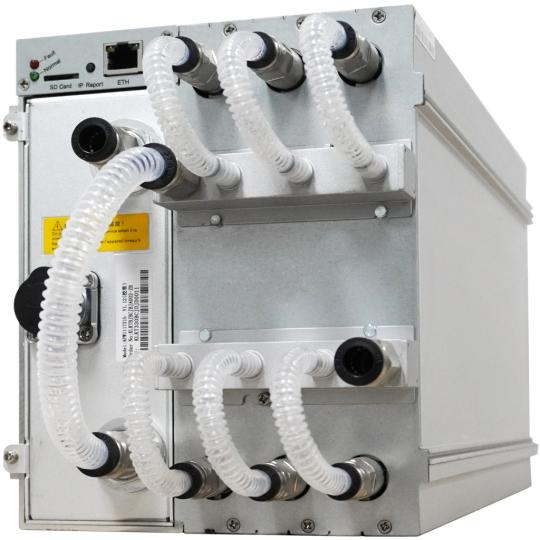
    1. Bitmain Antminer S23 Hyd – Ultra-efficient hydro-cooled flagship from Bitmain

    The Bitmain Antminer S23 Hyd is a next-generation, water-cooled Bitcoin miner designed for large-scale and industrial mining setups. It delivers a powerful hash rate of 580 TH/s while drawing 5,510W of power, achieving an efficiency of 9.5 J/TH. This makes it one of the most energy-efficient SHA-256 miners available at launch.

    Released in January 2026, the S23 Hyd builds on Bitmain’s advanced liquid-cooling technology to provide improved thermal control and reduced noise compared to traditional air-cooled machines. Its design is aimed at professional mining farms that prioritize high performance, stability, and lower long-term operating costs.

    Price$17,400
    Release DateJanuary 2026
    Hash Rate580 TH/s
    Power Consumption5,510W
    Efficiency9.5 J/T

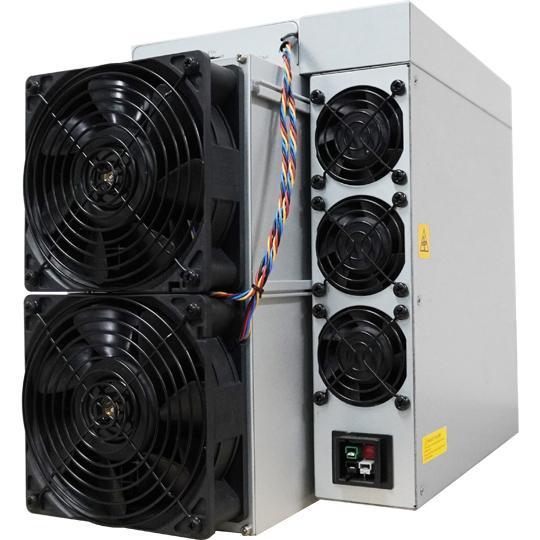
    2. Bitmain Antminer S21 XP Hyd – The most profitable Bitcoin miner

    Bitmain’s Antminer S21 XP Hyd is one of the most profitable ASIC miners for the SHA-256 hashing algorithm used by Bitcoin, Bitcoin Cash, Bitcoin SV, and other popular cryptocurrencies. This hydro-cooled miner can be cooled with antifreeze or water and outputs a hashrate of 473 TH/s with a power efficiency of 12 J/T.

    Currently, Bitmain is accepting orders for the Antminer S21 XP Hyd at a price of $10,170 per unit. Although the price per unit is high, the Antminer S21 XP Hyd still represents a large chunk of the Bitcoin mining industry, which has become much harsher after the fourth Bitcoin halving. 

    Price$10,170
    Release DateQ4 2025
    Hash Rate473 TH/s
    Power Consumption5,676W
    Efficiency12 J/T

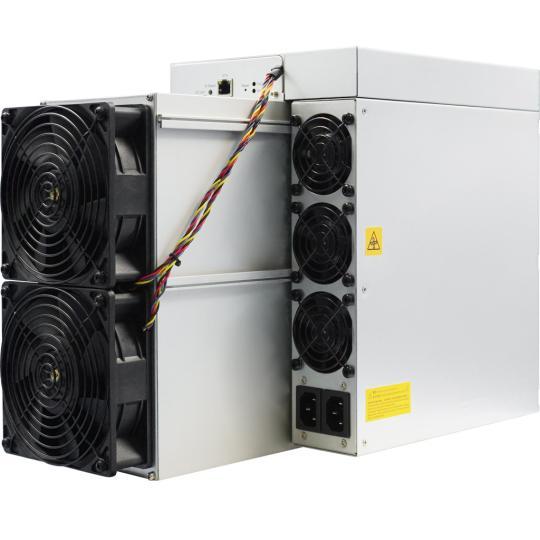
    3. Bitmain Antminer S21 – Best all-rounder

    The Bitmain Antminer S21 is one of the best all-around ASIC miners for the SHA-256 algorithm, making it suitable for mining Bitcoin, Bitcoin Cash, and similar cryptocurrencies. It delivers a hash rate of 200 TH/s while maintaining strong power efficiency at 17.5 W/Th, offering a solid combination of performance and energy savings.

    Priced at around $4,599, the Antminer S21 is a great choice for both beginners entering Bitcoin mining and experienced users looking to upgrade their setups. With its efficiency-focused design and reliable output, it provides consistent profitability potential even amid rising network difficulty.

    Price$4,599
    Release DateFebruary 2024
    Hash Rate200 TH/s
    Power Consumption3,500W
    Efficiency17.5 J/T

    4. Bitmain Antminer KS5 Pro – Best Kaspa ASIC miner

    The Bitmain Antminer KS5 Pro is currently the most powerful ASIC miner specialized for KHeavyHash, the hashing algorithm used by the Kaspa cryptocurrency. This air-cooled miner generates 21 TH/s, is rated at 3,150W and has a power efficiency of 150 J/T. 

    The Antminer KS5 Pro’s impressive power comes with a substantial price tag, as Bitmain is selling the miner at a price of $15,000 per unit.

    With Kaspa being the most profitable cryptocurrency to mine at the moment, we can expect the competition in the Kaspa ASIC miner industry to intensify significantly in the coming months.

    Price$15,000
    Release DateOctober 2024
    Hash Rate21 TH/s
    Power Consumption3,150W
    Efficiency150 J/T

    5. Canaan Avalon Made A1466 – High-performance Bitcoin miner by Canaan

    The Avalon Made A1466 is a powerful Bitcoin ASIC miner produced by Canaan. This miner outputs 150 TH/s at a power efficiency of 21.5 J/T. The Avalon Made A1466, which is the flagship model of Canaan’s A14 series, is sold for roughly $1,800 by the manufacturer.

    The Avalon Made A1466 is a solid choice for those who require a powerful Bitcoin miner at a relatively low price per unit.

    Price$1,500
    Release DateSeptember 2023
    Hash Rate150 TH/s
    Power Consumption3,230W
    Efficiency21.5 J/TH

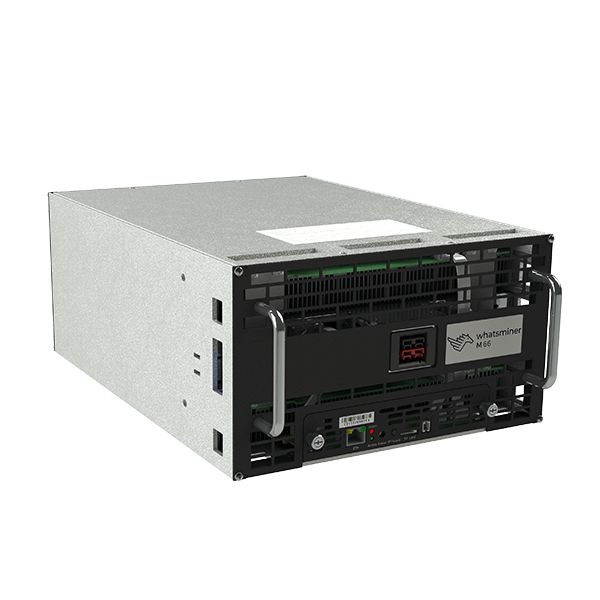
    6. MicroBT WhatsMiner M66 – Powerful SHA-256 ASIC miner by MicroBT

    One of the best alternatives to Bitmain’s Antminer series is the WhatsMiner series produced by MicroBT. One of the company’s most powerful miners is the WhatsMiner M66. This immersion-cooled miner is sold for $4,767 by the manufacturer and outputs a hashrate of 247 TH/s. The miner has a power consumption of 5,452W and a power efficiency rating of 19.9 J/T. 

    Although this ASIC miner is certainly among the more powerful options available on the market, it also has a hefty price tag, which might not make it suitable for all miners.

    Price$4,767
    Release DateOctober 2023
    Hash Rate247 TH/s
    Power Consumption5,452W
    Efficiency19.9 J/T

    7. Bitmain Antminer L9 – Best Scrypt ASIC miner

    The Scrypt hashing algorithm is used by two of the most popular cryptocurrencies on the market – Litecoin and Dogecoin. Currently, the most effective ASIC miner for the Scrypt algorithm is Bitmain’s Antminer L9.

    The Antminer L9 generates 16 GH/s at a power consumption 3,360W and an efficiency of 210 J/G. This air-cooled miner is designed to function at an operating temperature of 75 degrees Celsius. 

    Bitmain was selling the Antminer L9 at $5,584 per unit, though the miners sold out shortly after it’s September 2025 release. 

    Price$5,584
    Release DateSeptember 2025
    Hash Rate16 GH/s
    Power Consumption3,360W
    Efficiency210 J/G

    8. Bitmain Antminer X9 – Best RandomX ASIC miner

    Although Monero’s RandomX hashing algorithm was designed to be mineable by consumer-grade computer hardware, it can also be mined with specialized hardware. Bitmain’s Antminer X9 is currently the most powerful ASIC miner for Monero.

    This miner, which Bitmain is selling for $5,600 per unit, outputs 1000 KH/s and has a power consumption of 2,472W. In terms of power efficiency, this air-cooled miner is rated at 2.47 J/K.

    Price$5,600
    Release DateJuly 2026
    Hash Rate1000 KH/s
    Power Consumption2,472W
    Efficiency2.47 J/K

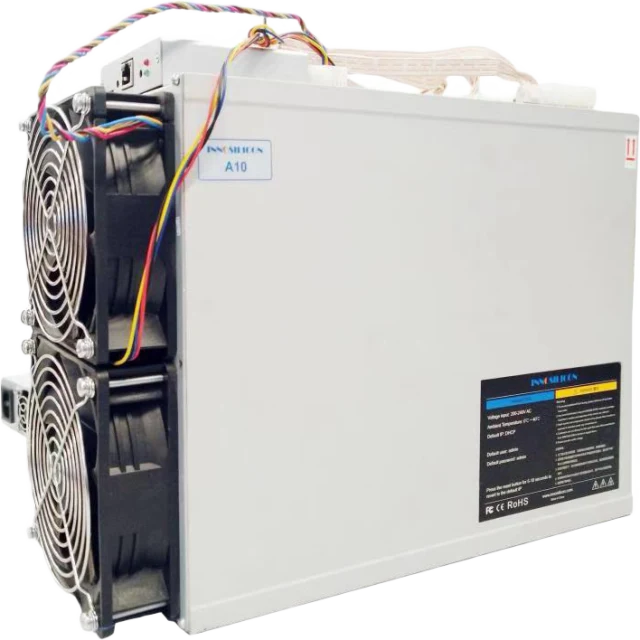
    9. Innosilicon A10 Pro ETH – Solid EtHash miner

    Although Ethereum no longer uses a Proof-of-Work consensus mechanism, there are still some notable cryptocurrencies using the EtHash hashing algorithm, for example Ethereum Classic. Innosilicon’s A10 Pro ETH is one of the most compelling options for miners that need an ASIC tailored for the EtHash algorithm. 

    The A10 Pro ETH outputs a hashrate of 500 MH/s and has a power consumption of 860W. The miner has an efficiency rating of 1.92 J/MH.

    Price$1,900
    Release DateMay 2020
    Hash Rate500 MH/s
    Power Consumption860W
    Efficiency1.92 J/MH

    9. Bitmain Antminer Z15 Pro – Best Zcash miner

    The Bitmain Antminer Z15 Pro is a powerful ASIC miner designed for cryptocurrencies that use the Equihash hashing algorithm, such as Zcash (ZEC). The Z15 Pro is a compelling option for miners looking for a high-performance ASIC specifically optimized for Equihash mining.

    The Antminer Z15 Pro delivers a hashrate of 840 KSol/s and has a power consumption of 2,780W. The miner has an efficiency rating of 3.31 J/KSol.

    Price$4,999
    Release DateJune 2023
    Hash Rate840 KSol/s
    Power Consumption2,780W
    Efficiency3.31 J/KSol

    FAQs

    Now that we have showcased the best ASIC miners available on the market today, let’s answer some of the most common questions users have on the topic of ASIC miners. 

    What is an ASIC mining rig?

    An ASIC mining rig is a device that is specialized to mine a specific type of cryptocurrency as efficiently as possible. ASICs (application-specific integrated circuits) are chips that are designed for a very narrow range of tasks, in contrast to the chips found in desktop computers, laptops and smartphones, which are capable of performing a variety of tasks. 

    When it comes to ASIC miners, ensuring a safe operating temperature is crucial. Depending on their design, ASIC miners can use air cooling, liquid cooling or immersion cooling.

    Are ASIC miners profitable?

    The profitability of ASIC miners depends on many different factors. This includes the cost of the ASIC miner itself, the cost of hosting and maintenance, electricity costs, the price trend of the cryptocurrency that’s being mined, and more factors. 

    Some cryptocurrencies such as Bitcoin can only be profitably mined with ASICs since consumer-grade computer hardware is not powerful enough to mine them effectively.  

    Can ASIC miners be used for anything else?

    The chips powering ASIC miners are designed specifically to mine a certain hashing algorithm as efficiently as possible. Therefore, ASIC miners can not be used for any other purpose than mining the cryptocurrency / hashing algorithm they were designed for. 

    The bottom line

    We hope that our roundup of the best ASIC miners has helped you find the best models for mining popular cryptocurrencies such as Bitcoin, Litecoin, Dogecoin, and Kaspa. Although cryptocurrency mining can certainly be profitable, running a successful mining operation requires a significant amount of capital, resources, and knowledge. 

    If you want to learn more about the topic of cryptocurrency mining, make sure to take a look at our list of the best Bitcoin mining companies to invest in.